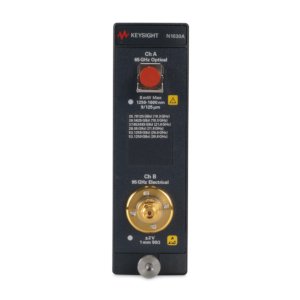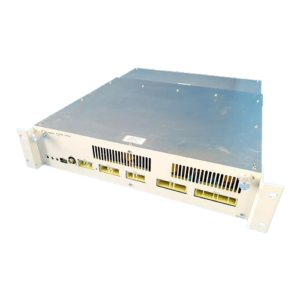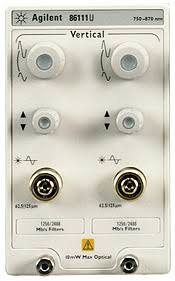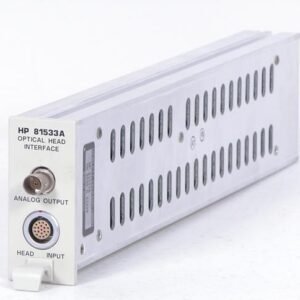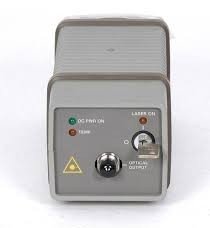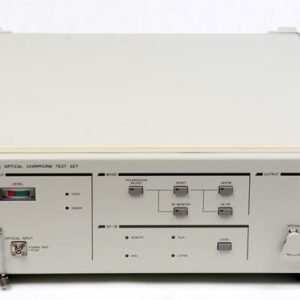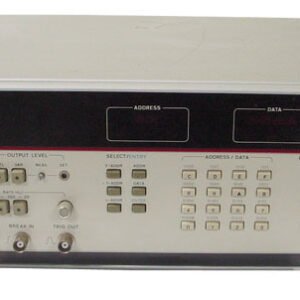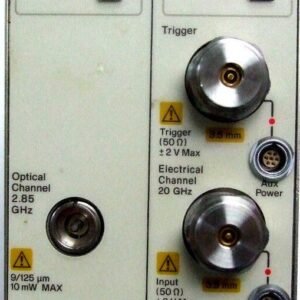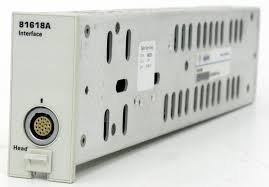

The GN Nettest/Photonetics Y8750 is an optical test instrument engineered for precise characterization of optical components and systems in demanding laboratory and manufacturing environments. Built on a modular benchtop platform, it delivers high accuracy and stability through programmable control and user-accessible interfaces. The instrument supports multi-wavelength testing configurations and external analog control for advanced measurement workflows.
## Technical Specifications
The Y8750 integrates tunable laser modules with external cavity design, offering tuning resolution of 10 pm (with 1 pm optional). Output power options span 0 dBm, +6 dBm, and +10 dBm. Tunable laser modules provide broad wavelength coverage with ranges up to 70 nm or 80 nm across bands including 1300 nm, 1400 nm, C-band, and L-band.
The platform accommodates amplified spontaneous emission (ASE) sources and erbium-doped fiber amplifier (EDFA) modules for multi-wavelength test architectures. Programmability is achieved via IEEE-488 and RS-232 interfaces. External analog inputs and outputs enable fine wavelength tuning, amplitude modulation, and spectral sweep recording.
## Key Features
• Modular optical source platform supporting tunable lasers, ASE sources, and EDFA amplifier modules
• High-resolution wavelength tuning at 10 pm standard resolution
• Multiple output power levels from 0 dBm to +10 dBm
• IEEE-488 and RS-232 programmable interfaces for automated test sequences
• Analog I/O for external control and waveform acquisition
• Benchtop form factor designed for laboratory deployment
## Typical Applications
• Component characterization for optical communications systems
• Research and development of optical technologies
• Manufacturing quality control of optical devices and subsystems
## Compatibility & Integration
The Y8750 operates within optical test architectures requiring component and system characterization. Its modular design accommodates various optical source configurations, and standard IEEE-488 and RS-232 interfaces enable integration into automated test environments and data acquisition systems.