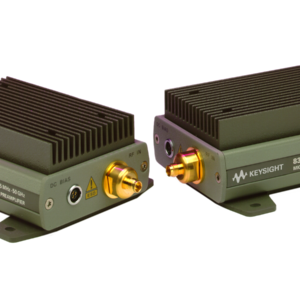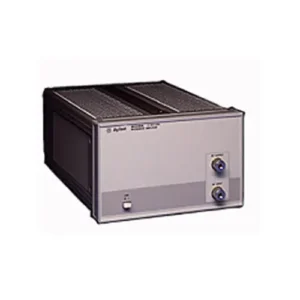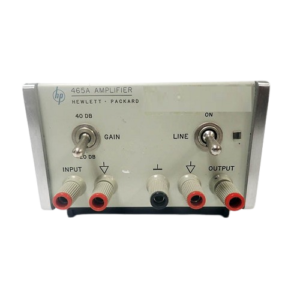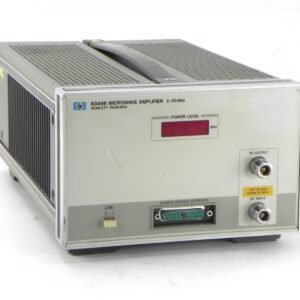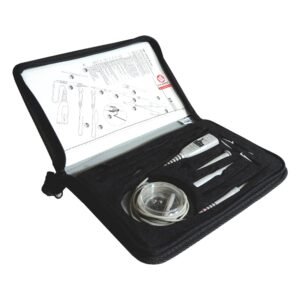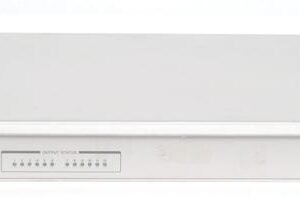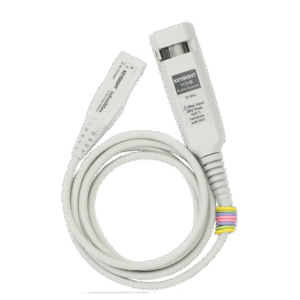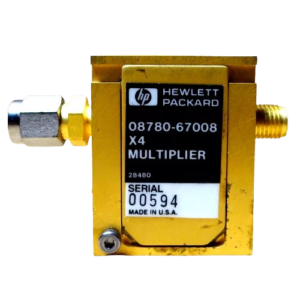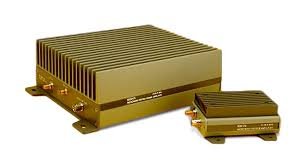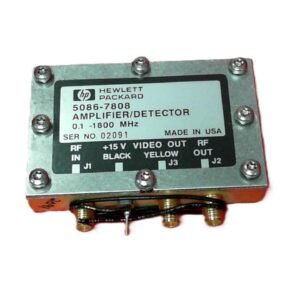
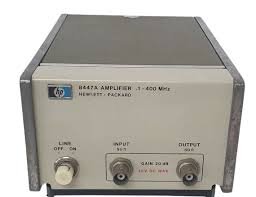

The HP/Agilent 8447F is a dual-path amplifier combining preamplification and power amplification in a single instrument. It addresses low-signal sensitivity challenges and output power limitations across RF and microwave measurement systems. Built on thin-film hybrid integrated circuits, the 8447F delivers low-noise gain with flat frequency response and high reliability.
The instrument operates across 0.1 MHz to 1300 MHz with independently configurable or cascaded amplification paths. The main preamplifier provides 25 dB minimum gain with noise figure below 8.5 dB and output capability exceeding +7 dBm at 1 dB compression. The power amplifier stage delivers 22 dB ± 2.0 dB gain with output power ≥ +12.5 dBm across 0.1 to 1000 MHz. When cascaded, total gain reaches 47 dB with ± 1.5 dB flatness across the passband. Optional H64 configurations extend low-frequency coverage to 9 kHz with 26 dB minimum gain and improved 7.0 dB typical noise figure, or add high-frequency preamplification at 25 dB gain.
Technical Specifications
• Frequency Range: 0.1 MHz to 1300 MHz (main); 9 kHz to 50 MHz (Option H64)
• Mean Gain: 25 dB (main preamp); 22 dB ± 2.0 dB (power amp); up to 47 dB cascaded
• Gain Flatness: ± 1.5 dB (main); ± 2 dB (H64 low-frequency)
• Noise Figure: < 8.5 dB (main preamp); +7 dBm (main preamp); ≥ +12.5 dBm (power amp, 0.1–1000 MHz)
• Harmonic Distortion: < −60 dB at typical output levels
• Input/Output Impedance: 50 Ω
• VSWR: < 2.0:1 input, 40 dB
• Maximum DC Input Voltage: ± 10 V
• Group Delay Variation: < 0.15 ns typical over any 50 MHz band
• Risetime: 400 ps typical
• Connectors: Type-N Female (Option H64)
– Key Features
• Modular dual-path architecture for independent or cascaded operation
• Low-noise preamplification with < 8.5 dB noise figure
• High gain linearity with ± 1.5 dB flatness across operating bandwidth
• Excellent harmonic suppression for clean signal conditioning
• Matched 50 Ω input and output for seamless system integration
• Extended low-frequency option covering 9 kHz baseline
– Typical Applications
• Sensitivity enhancement in RF/microwave measurement systems
• Low-level signal acquisition in spectral analysis and receiver testing
• Output power boosting for device characterization and stress testing
• Dynamic range expansion in signal monitoring and detection networks
– Compatibility & Integration
50 Ω impedance throughout input and output ports ensures compatibility with standard RF test systems, spectrum analyzers, and signal generators. Type-N connectors support broadband, low-loss interconnection.