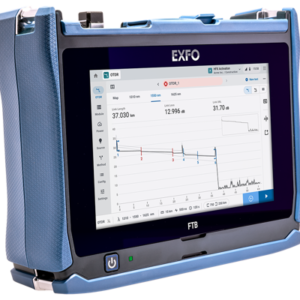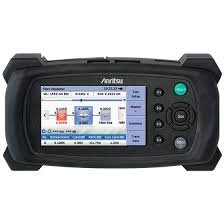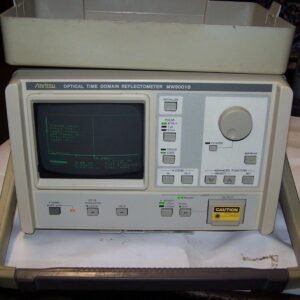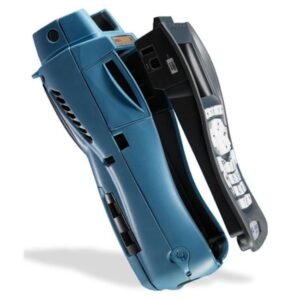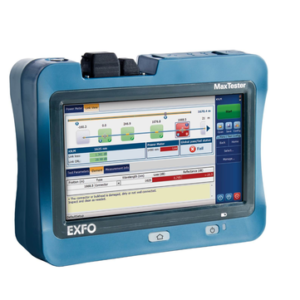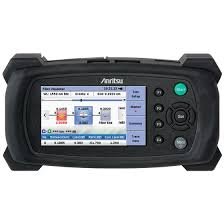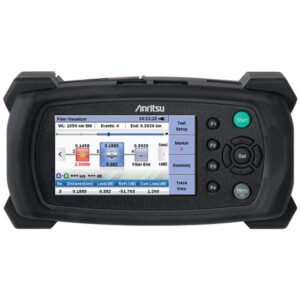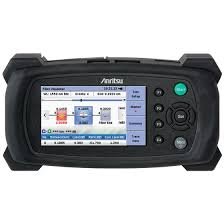
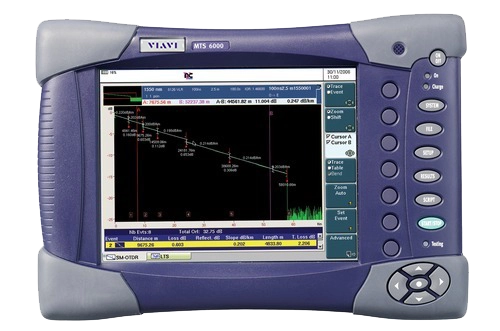

The JDSU T-BERD 6000L Lite is a compact single-mode fiber OTDR engineered for installation, troubleshooting, and maintenance of access and FTTx networks. This lightweight instrument delivers essential OTDR functionality for fiber characterization, fault localization, and cable analysis in field environments. Its 8.4-inch transreflective color display and one-button operation make it accessible to both novice and experienced technicians, while comprehensive measurement capabilities and integrated connectivity tools support efficient network diagnostics.
Technical Specifications
• Wavelengths: 1310 nm, 1550 nm
• Maximum Distance Range: 260 km
• Dynamic Range: Up to 44 dB at 1550 nm
• Event Dead Zone: As low as 1 meter
• Attenuation Dead Zone: As low as 4 meters
• Pulse Widths: 3 ns to 200 ns
• Display: 8.4-inch transreflective TFT color, 800 × 600 resolution
• Acquisition Points: Up to 128,000 points with 0.1 s real-time sweep
• Data Storage: 1000 test results (internal memory)
• Connectivity: USB and Ethernet ports
– Key Features
• Measures fiber link attenuation and attenuation coefficient along installed routes
• Quantifies reflection events and splice/connector loss with precision
• Pinpoints fault locations and performs trace analysis for rapid troubleshooting
• Built-in Visual Fault Locator for visual identification of breaks and bends
• Integrated power meter and continuous wave laser source for link verification
• USB-compatible video inspection probe support
• One-button OTDR operation with intuitive graphical interface
• High-visibility display for field use across varying lighting conditions
– Typical Applications
Single-mode fiber installation and certification in access networks, fiber-to-the-premises (FTTx) deployments, and network maintenance. Suitable for field technicians characterizing newly installed links and troubleshooting existing fiber segments.
– Compatibility & Integration
Works with PC software suites including FiberTrace (OFS-100) and FiberCable (OFS-200) for post-processing test results via USB or Ethernet data transfer.