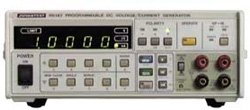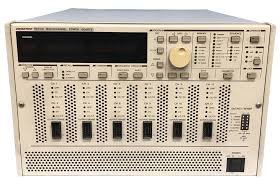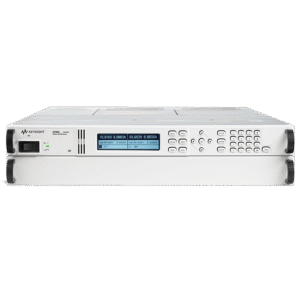
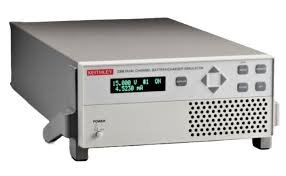

The Keithley 2306 Dual Channel Battery Charger/Simulator delivers independent, isolated channels for battery-powered device development and testing. Channel 1 operates as a battery simulator with programmable output impedance; Channel 2 functions as a charger/simulator. The instrument provides precise voltage and current control, rapid transient response, and accurate measurement of DC and pulsed load currents—essential for validating battery management systems and power consumption profiles across diverse operational states.
## Technical Specifications
**Voltage Output**
• Range: 0 to +15 VDC per channel
• Output accuracy: ±(0.05% + 3 mV) for Channel 1; ±(0.05% + 10 mV) for Channel 2
• Programming resolution: 1 mV (Channel 1); 10 mV (Channel 2)
• Readback accuracy: ±(0.05% + 3 mV) per channel
• Output voltage settling time: 5 ms
• Load regulation: ±(0.01% + 2 mV) per channel
• Line regulation: ±0.5 mV per channel
• Stability: ±(0.01% + 0.5 mV) per channel
**Current Output**
• Peak current: 5 A maximum per channel
• Continuous average output current dependent on channel voltage and power budget (50 W shared between channels)
**Battery Simulator (Channel 1)**
• Output impedance range: 0 to 1.00 Ω in 0.01 Ω steps
• Impedance adjustable with output enabled
**Operating Environment**
• Temperature: 0°C to 50°C (derated to 70°C); full power at 0°C to 35°C
• Storage temperature: -20°C to 70°C
• Humidity: <80% at 35°C, non-condensing
**Interface & Control**
• Programming: IEEE-488.2 (SCPI)
• User-definable power-up states: 5
• Remote sense: 1 V maximum drop per lead with integrity monitoring
## Key Features
• Two independent, electrically isolated channels
• Programmable output impedance on Channel 1 for realistic battery simulation
• Remote sensing with connection integrity monitoring
• ±(0.01% + 2 mV) load regulation ensures stable operation under transient loads
• EU and FCC compliance: EN 55011, EN 61010-1, FCC Part 15 Class B
## Typical Applications
• Battery management system validation and development
• Power consumption profiling of battery-dependent devices
• Charger circuit testing and optimization
• Transient load response characterization