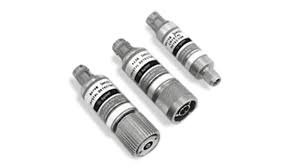

A Practical RF Detector for Microwave Measurement Systems
When engineers work with RF or microwave signals, they often need a simple and reliable way to monitor signal power. In many test setups, measuring signal strength continuously is important for calibration, alignment, and troubleshooting. Instead of using complex instruments for every measurement, RF detectors are commonly used to convert high-frequency signals into a DC voltage that can be easily measured.
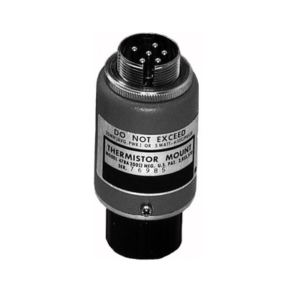
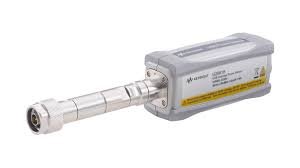
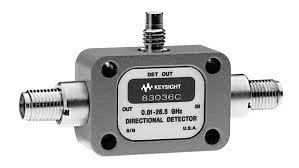
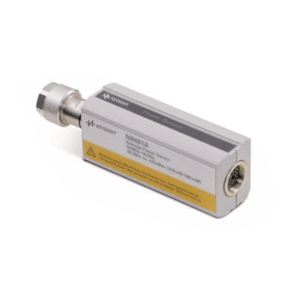
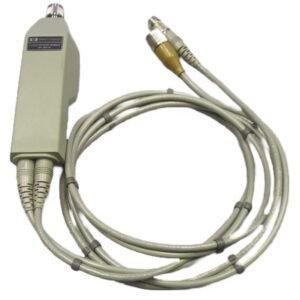
The Keysight Agilent 423B Low-Barrier Schottky Diode Detector performs exactly this function. It converts RF signals within the 10 MHz to 12.4 GHz frequency range into a proportional DC output, allowing engineers to monitor signal levels using oscilloscopes, voltmeters, or other measurement devices.
Because of its wide frequency coverage and stable broadband response, the detector is commonly used in microwave laboratories, RF system development environments, and automated test setups.
How RF Diode Detectors Work
RF detectors rely on semiconductor diodes to rectify high-frequency signals. When an RF signal enters the detector, the diode converts the alternating signal into a DC voltage that corresponds to the signal’s amplitude.
The 423B detector uses a low-barrier Schottky diode, which is designed specifically for high-frequency signal detection. Compared with other diode technologies, low-barrier Schottky diodes offer several advantages:
high sensitivity at low signal levels
fast response to rapidly changing RF signals
broadband frequency performance
stable operation without external bias
Because the detector does not require a DC bias supply, it can be used directly with standard measurement equipment. This makes it easy to integrate into RF measurement setups.
Broadband RF Performance
One of the key strengths of the 423B diode detector is its broadband RF performance. The detector maintains consistent response across its operating frequency range while minimizing measurement errors caused by impedance mismatch.
Typical performance characteristics include:
frequency range: 10 MHz to 12.4 GHz
frequency response: approximately ±0.3 dB
maximum SWR: about 1.15 below 4 GHz and 1.3 up to 12.4 GHz
sensitivity: greater than 0.5 mV per microwatt of input power
maximum continuous input power: around 200 mW
These specifications allow the detector to maintain reliable signal detection across a wide range of RF test conditions.
Applications in RF and Microwave Engineering
Diode detectors like the Agilent 423B are widely used in RF and microwave engineering because they provide a straightforward method for monitoring signal amplitude.
Typical applications include:
RF power monitoring in test setups
automatic level control circuits in signal generators
microwave system calibration
sweep generator leveling loops
frequency response measurements of RF components
In many RF measurement systems, the detector is connected through a directional coupler or sampling port. This allows engineers to observe signal power without interrupting the main signal path.
Use in Automated Test and Measurement Systems
In automated test environments, diode detectors are often used as part of feedback or monitoring circuits. For example, a signal generator may use a detector to measure its own output power and automatically adjust the signal level to maintain consistent output.
The 423B detector is well suited for this type of application because of its fast response time and stable broadband characteristics. These properties allow the detector to track signal amplitude changes quickly, which is important in automated RF measurement systems.
Reliable RF Measurement Accessory
RF laboratories often rely on a combination of measurement instruments and specialized accessories to perform accurate signal analysis. While spectrum analyzers and power meters provide detailed measurement capabilities, diode detectors remain valuable because they offer a fast and simple way to monitor signal amplitude.
The Keysight Agilent 423B Low-Barrier Schottky Diode Detector provides engineers with a reliable tool for detecting RF signals across a wide frequency range. Its broadband response, simple operation, and rugged design make it a practical accessory for many RF and microwave measurement setups.
Frequently Asked Questions
What does the Keysight 423B detector do?
It converts RF signals into a DC voltage that represents the signal’s power level.
What frequency range does the detector support?
The detector operates from 10 MHz to 12.4 GHz, covering a wide range of RF and microwave applications.
Where is this detector typically used?
It is commonly used in RF laboratories for power monitoring, signal detection, and automated measurement systems.