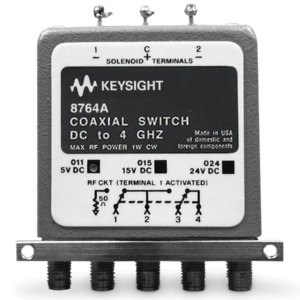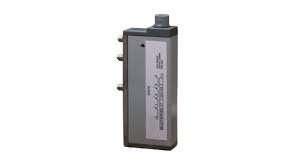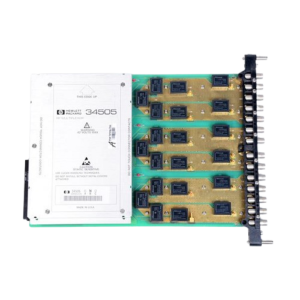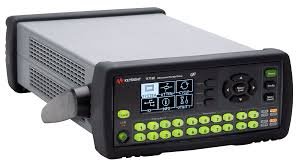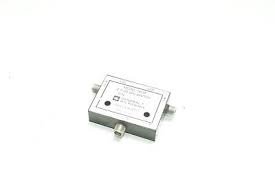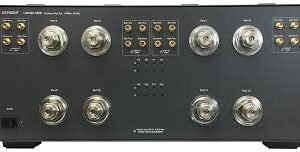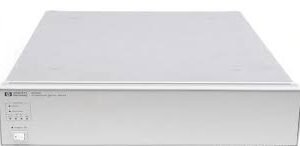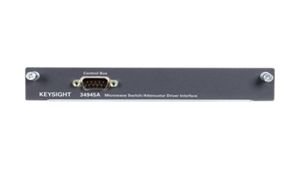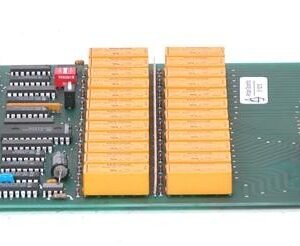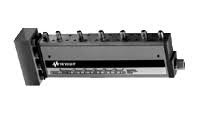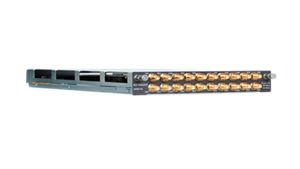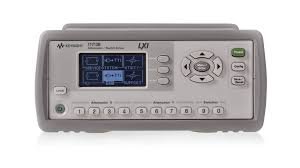
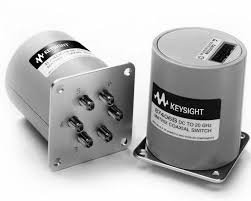

The Keysight (Agilent) 87406B is a coaxial matrix switch for RF and microwave signal routing in automated test systems and communication infrastructure. Operating DC to 20 GHz, it supports multiple blocking matrix configurations (3×3, 2×4, 1×5) and single-pole multiple-throw routing up to 1×5. The switch uses magnetic latching with selectable make-before-break or break-before-make operation modes. All unselected RF ports terminate with 50 Ω loads, minimizing reflections and system noise.
Technical Specifications
• Frequency Range: DC to 20 GHz
• Switch Configurations: 3×3 blocking matrix, 2×4 blocking matrix, 1×5 blocking matrix, SPxT routing to 1×5
• Switching Mechanism: Magnetic latching
• Operation Modes: Make-before-break and break-before-make
• Port Termination: 50 Ω on all unselected RF ports
• Isolation: Typically > 100 dB at 20 GHz
• Insertion Loss Repeatability: 0.03 dB up to 5 million cycles
• Operating Life: 10 million cycles typical; 5 million cycles guaranteed
• Power Supply: 24 VDC (option T24); indicator supply 20–32 VDC
• Control Current: 1200 mA per RF port; 1200 mA for open-all function (6 ports × 200 mA)
– Key Features
• Insertion loss repeatability of 0.03 dB over 5 million switching cycles reduces measurement uncertainty and random error sources
• High isolation exceeding 100 dB at 20 GHz ensures clean signal separation in dense switching matrices
• Opto-electronic indicators and optional TTL/5V CMOS control interface enable integration with diverse system architectures
• Magnetic latching eliminates continuous power draw during static connection states
• Extended operating life—10 million cycles typical—lowers maintenance costs and system downtime
– Typical Applications
• Automated RF and microwave test benches
• Communication infrastructure signal routing
• Radar platform switching networks
– Compatibility & Integration
The 87406B integrates with switch drivers such as the Keysight 11713A. Control interfaces include opto-electronic indicators with optional TTL/5V CMOS compatibility. Standard configurations include 16-pin DIP sockets with ribbon cable options for modular deployment. Designed for plug-and-play integration into existing ATE frameworks.