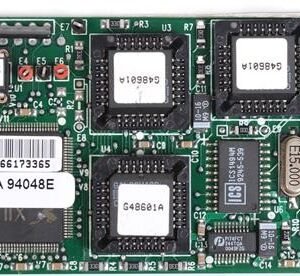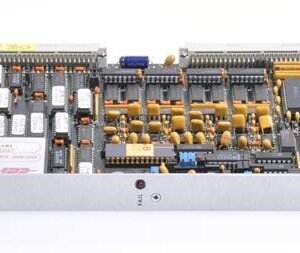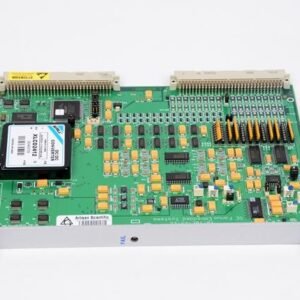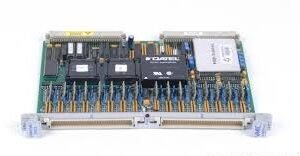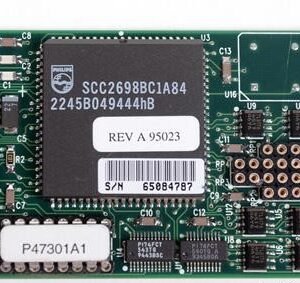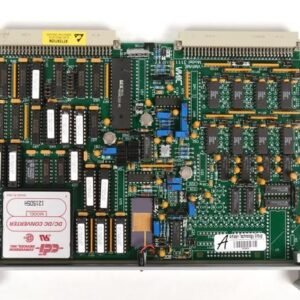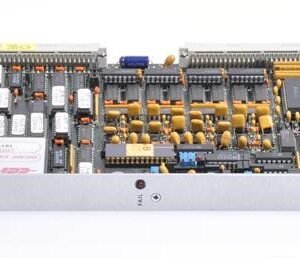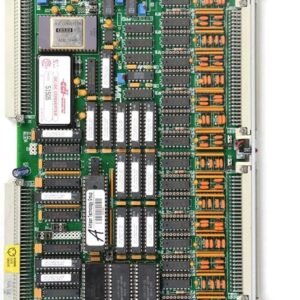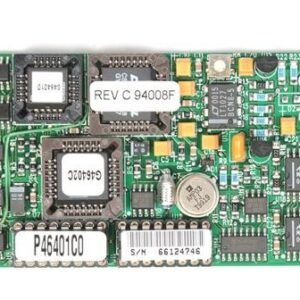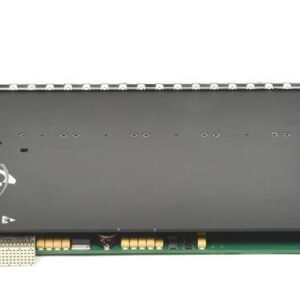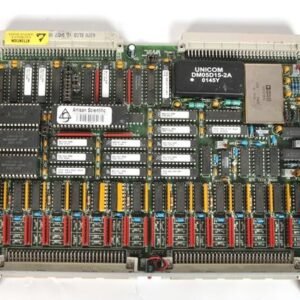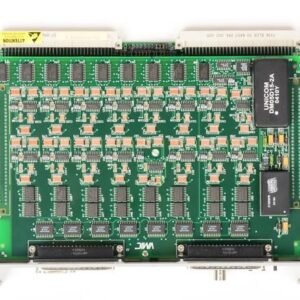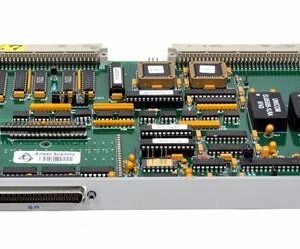
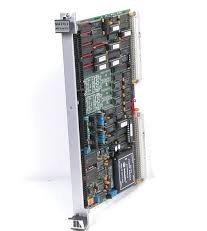

The Kontron / Thales / Matrix MD-DAADIO4NFP is a VME double Eurocard (6U) combination board integrating analog-to-digital, digital-to-analog, and parallel I/O functionality for real-time data acquisition and control in embedded systems. It occupies a single VME slot and delivers flexible signal conditioning with software-configurable gain, multiple input/output modes, and full interrupt-driven parallel I/O control.
## Technical Specifications
**Analog-to-Digital Converter (ADC):**
• 12-bit resolution with 12 µs or 8 µs conversion time
• 32 single-ended inputs (referenced to common analog ground)
• 32 pseudo-differential inputs (referenced to a common point)
• 16 differential inputs with independent reference inputs
• Jumper-selectable input voltage ranges: 0-10 V, ±5 V, ±10 V
• Overvoltage tolerance to ±35 V without damage
• Software-programmable gain factors: 1, 2, 4, 8, 16, 10, 20, 40, 80, and 160
• Dynamic gain switching between channel samples
**Digital-to-Analog Converter (DAC):**
• 12-bit resolution per channel
• Eight independent voltage output channels
• Jumper-selectable output ranges: 0-5 V, 0-10 V, ±5 V, ±10 V
• Multiplying D/A and current loop capabilities
• External reference input for scaling to non-standard ranges
• Fully independent output drive circuitry
**Voltage-to-Current Adapter (VCA):**
• Converts channel pairs to current loop operation
• Supported modes: 4-20 mA, 0-20 mA, or 5-25 mA
• Plug-in configuration for any number of channel pairs
**Parallel I/O (PIO):**
• 48 TTL I/O lines across six ports
• Individual software configuration as input or output
• Port A: Eight lines with interrupt source capability
• Per-line interrupt masking and pattern/state-change detection
## Key Features
• Single VME slot form factor (6U double Eurocard)
• Flexible jumper and software configuration for input/output modes
• Interrupt-driven parallel I/O with pattern recognition
• Programmable interrupt level, vector, and source registers
• Independent control and data registers for D/A and A/D sections
## Typical Applications
Process control, data acquisition systems, industrial automation, sensor conditioning, and multi-channel signal routing in VME-based embedded platforms.
## Compatibility & Integration
Designed for VME architecture with standard register-based control interface. All ADC, DAC, and PIO functions are independently configurable through board control and status registers.