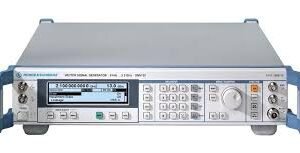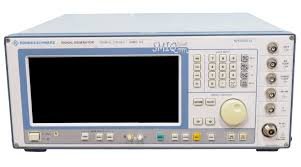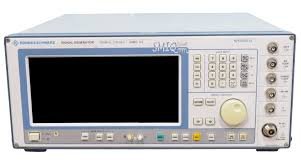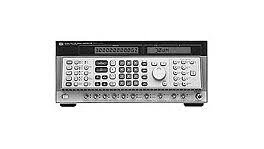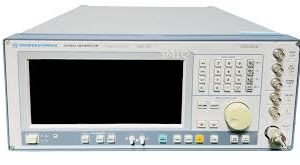

The Marconi IFR Aeroflex 2052 is a digital and vector signal generator engineered for RF testing across modern digital communication systems. Operating from 10 kHz to 5.4 GHz, it delivers complex modulation formats through internal DSP processing, with dedicated digital and vector modes supporting frequencies up to 2.7 GHz. The instrument provides analog modulation (AM, FM, PM), digital modulation (FSK, PSK, DPSK, QAM up to 256-level), and vector I/Q modulation with typical errors below 0.5%.
Technical Specifications
Frequency Range:
• 10 kHz to 5.4 GHz (analog and analog FM modes)
• 10 MHz to 2.7 GHz (digital and vector modes)
• Frequency resolution: 0.1 Hz, 1 Hz, or 100.0 mHz
Output Power:
• Analog Mode: −144 dBm to +13 dBm; maximum +11 dBm above 2.7 GHz; AM reduces to +7 dBm at maximum depth
• Digital/Vector Mode: −138 dBm to +6 dBm peak envelope power; selectable overrange mode to +19 dBm uncalibrated
Output Level Accuracy:
• Digital/Vector below 2 GHz: ±1.5 dB
• Digital/Vector below 2.7 GHz: ±2 dB
• DC Vector (to 2 GHz): ±1% amplitude, ±1° phase
• DC Vector (above 2 GHz): ±1.5% amplitude, ±1.5° phase
• Temperature coefficient: 50 kHz
• FM (AC-coupled): 10 Hz to 30 kHz (1 dB), typical >50 kHz
• FSK: Typical 3 dB bandwidth >1 MHz
• Vector: ±0.5 dB to 3 MHz (any carrier); ±1 dB to 10 MHz (carrier to 2 GHz); ±1.3 dB to 10 MHz (carrier to 2.7 GHz)
Vector Modulation:
• I/Q inputs with 10 MHz bandwidth
• Typical vector error 10 MHz) and 1 MHz bandwidth, both supporting up to 1% carrier frequency deviation
• Patented FM nulling correction for DCFM carrier offset elimination
• 0.1 Hz frequency resolution across operating range
– Typical Applications
• Digital communication system development and validation
• FSK and complex QAM signal generation
• Vector modulation testing to 2.7 GHz
• FM deviation and bandwidth characterization
• RF receiver sensitivity and selectivity measurements