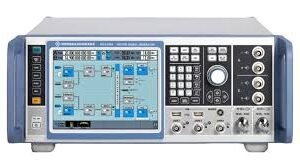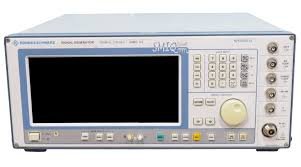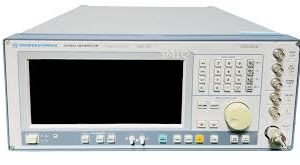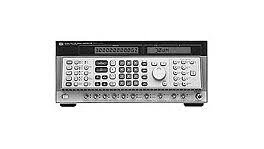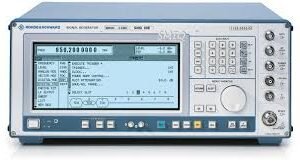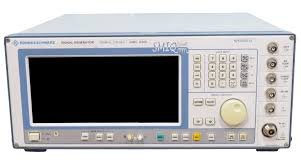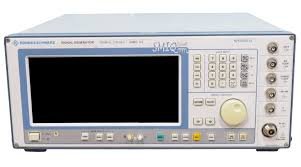

The Marconi IFR Aeroflex 2051T is a digital and vector signal generator spanning 10 kHz to 2.7 GHz, engineered for TETRA modulation and complex communication testing. It delivers precise output level control from –144 dBm to +13 dBm in analog mode, with selectable overrange capability to +19 dBm uncalibrated. Digital and vector modes operate from 10 MHz to 2.7 GHz with peak envelope power output of –138 to +6 dBm. The instrument combines low adjacent channel power performance with exceptional spectral purity—harmonics below –27 dBc across the frequency range and non-harmonic content below –70 dBc at 3 kHz offsets. Phase noise measures better than –116 dBc/Hz at 20 kHz offset, while residual FM remains under 7 Hz RMS deviation in the 300 Hz to 3.4 kHz bandwidth.
Technical Specifications
• Frequency Range: 10 kHz to 2.7 GHz (analog); 10 MHz to 2.7 GHz (digital/vector)
• Output Level (Analog Mode): –144 dBm to +13 dBm; up to +19 dBm uncalibrated overrange
• Output Level (Digital/Vector Mode): –138 to +6 dBm peak envelope power (–6 dBm PEP in advanced digital mode)
• Level Resolution: 0.1 dB
• Level Accuracy (Analog, 0 dBm), ±0.85 dB (>–50 dBm)
• Level Accuracy (Analog, 0 dBm), ±1 dB (>–50 dBm)
• Level Accuracy (Digital/Vector, <2.7 GHz): ±2 dB
• Temperature Stability: 0.005 dB/°C to 1.35 GHz; 0.01 dB/°C to 2.7 GHz
• Harmonics: <–27 dBc (1.35 GHz to 2.7 GHz)
• Non-Harmonics: <–70 dBc at ≥3 kHz offset
• SSB Phase Noise: <–116 dBc/Hz at 20 kHz offset
• Residual FM: <7 Hz RMS (300 Hz to 3.4 kHz bandwidth)
• VSWR (output <0 dBm): <1.25:1 to 2.2 GHz; <1.4:1 to 2.7 GHz
• Output Protection: 50 W reverse power (VSWR 5:1)
– Key Features
• Extended hysteresis mode: 24 dB continuous RF level control without interruption
• Flexible level entry: keyboard, up/down keys, rotary control
• Multiple level units: µV, mV, V, dB (1 µV/mV/EMF/PD reference), dBm
• 4-digit level display with unit annunciators
– Typical Applications
• TETRA system development and validation
• Complex modulation format testing
• Adjacent channel power assessment
• R&D environments requiring vector signal generation