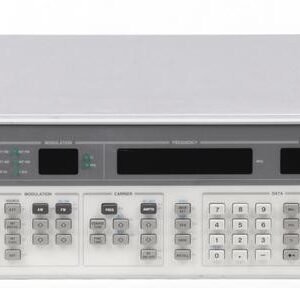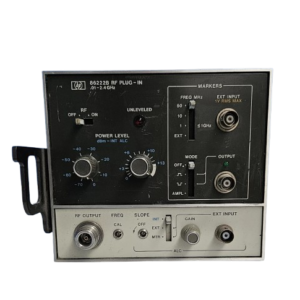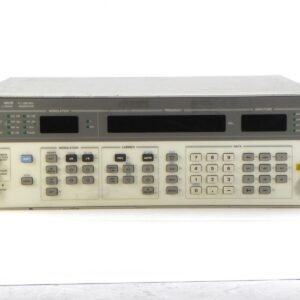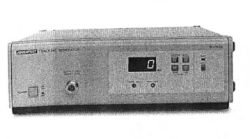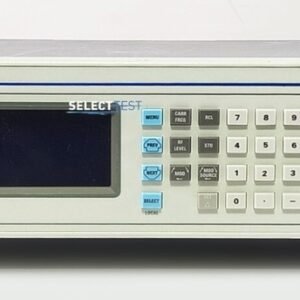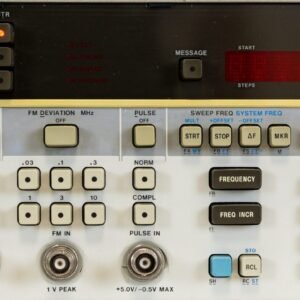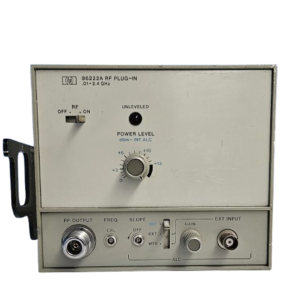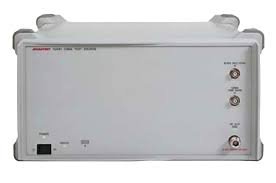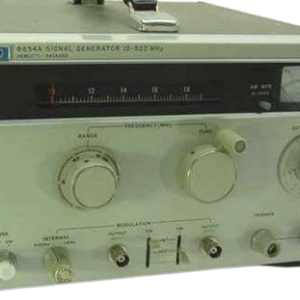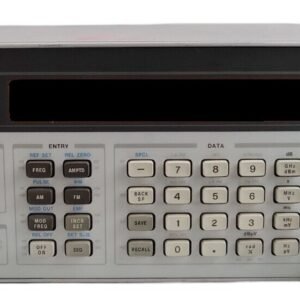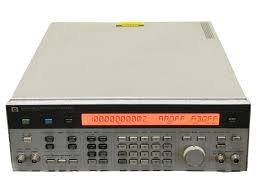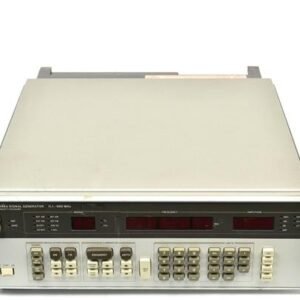
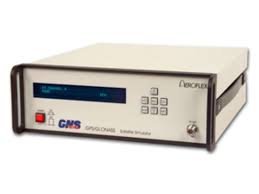

The Marconi IFR Aeroflex GNS-743A is a GPS/GLONASS satellite simulator engineered for precision RF testing and validation of satellite navigation receivers. It generates realistic L1 band signals from both GPS and GLONASS constellations, supporting single- and dual-channel configurations with independent, user-configurable channels. The simulator handles dynamic receiver scenarios through precise control of Doppler velocity, acceleration, and jerk—all adjustable to within 0.01 Hz—while maintaining GPS signal accuracy of less than 1 meter.
Technical Specifications
Satellite Signal Simulation
• Supported constellations: GPS, GLONASS (L1 frequency band)
• Channel configurations: Single-channel (GNS-743A-1L) or dual-channel (GNS-743A-2L)
• Satellite vehicles: GPS or GLONASS K=1–24, any combination per channel
• NAV data: User uploadable with dynamic z-count; almanac downloading supported
• Pseudo-range measurements: C/A epoch delay entry to 1 ns relative to 1 PPS sync
• Inter-channel bias: Supported
RF Output Performance
• Output power range: −158 dBm to −88 dBm
• Nominal output: −21 dBm
• Output accuracy: ±1 dB down to −158 dBm; calibrated to ±0.5 dB at −130 dBm
• RF leakage: Negligible
• Spurious emissions: Typically better than −35 dBc
• Harmonics: Typically better than −49 dBc
Signal Generation & Modulation
• Modulation modes: CW, AM, FM, PM, pulse modulation
• Code outputs: L1 C/A code, code chip clock, code epoch sync (TTL)
• NAV data clock output supported
• Doppler control: Velocity, acceleration, and jerk to within 0.01 Hz
• Frequency synthesis: Direct digital synthesis (DDS) for instantaneous RF frequency control
Carrier-to-Noise Testing
Facilitates C/N₀ acquisition and tracking measurements across configurable signal levels.
– Physical Characteristics
• Height: 6.0 inches (15.25 cm)
• Width: 15.3 inches (38.85 cm)
• Depth: 17.5 inches (44.45 cm)
– Key Features
• Dual-constellation support with independent per-channel configuration
• Sub-nanosecond pseudo-range timing resolution
• Fine Doppler control enables realistic dynamic motion profiles
• Low-noise RF output across wide dynamic range
• Inter-channel bias measurement capability for advanced receiver validation
– Typical Applications
Aerospace and aviation receiver qualification, automotive navigation system development, and satellite signal research environments requiring deterministic, repeatable test scenarios.