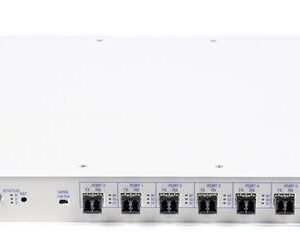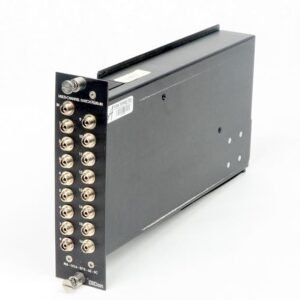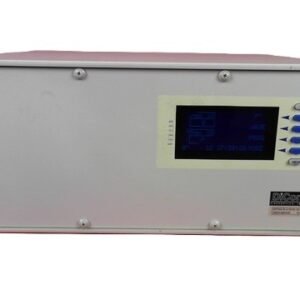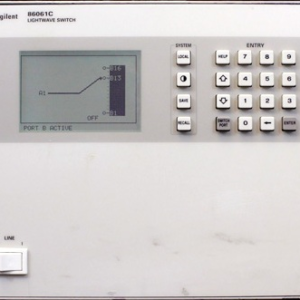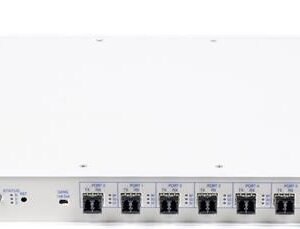
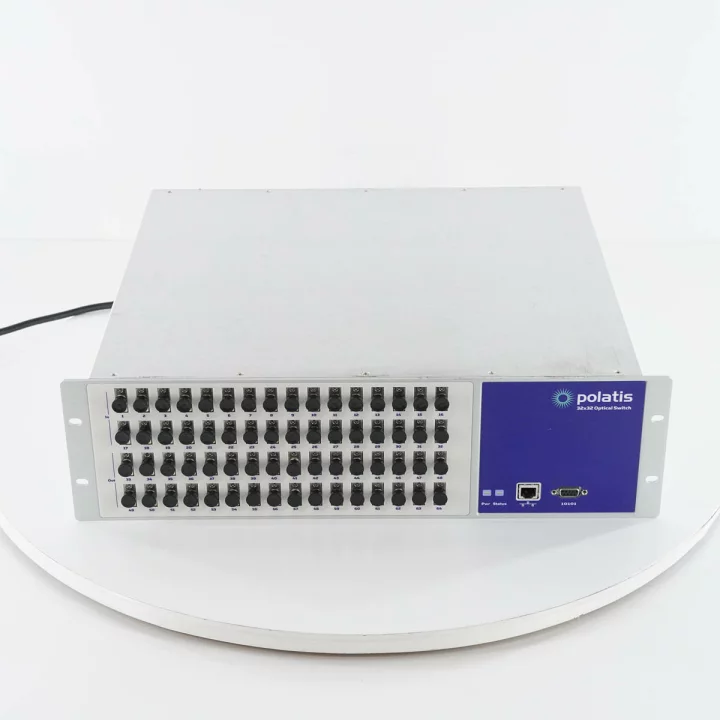

The Polatis I-OST-32X32-FU1-GSANS is a 32×32 optical matrix switch engineered for dynamic network routing and test automation. Utilizing patented DirectLight® beam-steering technology, this all-optical switch delivers fully non-blocking connectivity with protocol and bit-rate independence. The architecture supports bi-directional operation across dark or lit fiber, making it ideal for flexible test environments, equipment sharing, and network-layer verification without signal regeneration.
Technical Specifications
Switch Matrix & Architecture
• 32×32 optical matrix configuration
• Fully non-blocking, all-optical switching
• DirectLight® beam-steering technology
• Single-mode fiber support
• Bi-directional operation
Performance Characteristics
• Ultra-low insertion loss
• Fast switching speed
• High repeatability and signal stability
• Low polarization dependent loss (PDL)
• Wide optical power range
• Protocol and bit-rate independent
• Operates with dark or lit fiber
Control & Management
• SCPI, TL1, and SNMP protocols
• Web GUI for provisioning, monitoring, and control
• SDN integration via embedded NETCONF and RESTCONF interfaces
Physical & Power
• 19″ rack-mount 1 RU chassis
• Dual redundant hot-swappable AC (100-240 VAC) and DC (-48 VDC) power supplies
• Power consumption: 25-75 W typical
– Key Features
• DirectLight® Piezoelectric Technology — low optical loss with reliable beam steering
• Non-Blocking Architecture — All input ports simultaneously accessible to any available output port
• Protocol Agnostic — Operates independent of signal format, bit rate, or modulation
• Compact Form Factor — 1 RU 19″ rack enclosure accommodates full 32×32 matrix
• Redundant Power — Dual AC/DC supplies with hot-swap capability
– Typical Applications
• Network-level optical switching and fiber routing
• Equipment sharing and automated test environments
• IP over optical and client-side switching
• Fiber-layer monitoring and system verification
• Dynamic network reconfiguration
– Compatibility & Integration
• Management via SCPI, TL1, SNMP protocols
• SDN-ready with NETCONF and RESTCONF interfaces
• Web-based secure provisioning and control interface
• Single-mode fiber connectivity