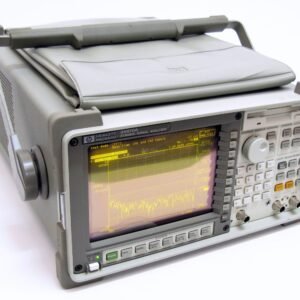
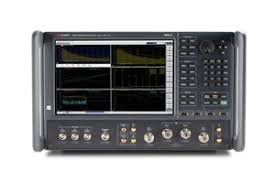
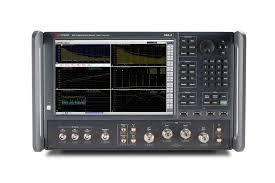
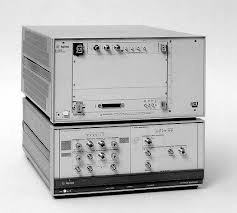
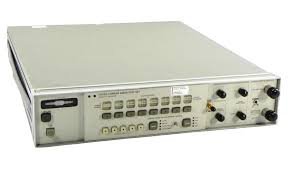
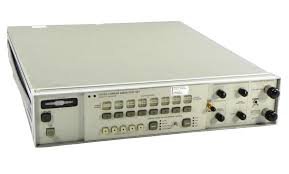
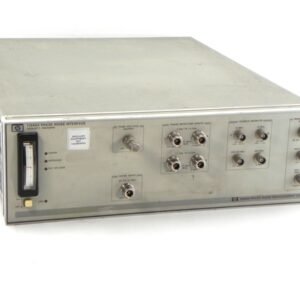
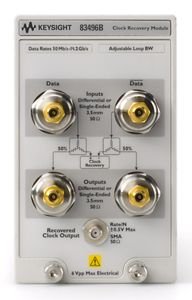
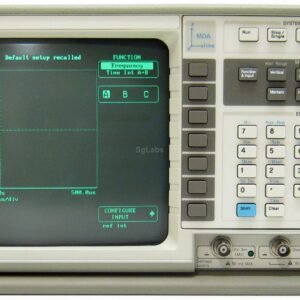
The Rohde & Schwarz FSUP50 is a dual-mode signal source analyzer that integrates spectrum analysis with phase noise measurement across frequencies from 20 Hz to 50 GHz. Engineered for oscillator and synthesizer characterization, radar signal evaluation, and interference analysis, the instrument delivers exceptional sensitivity through cross-correlation techniques and supports multiple phase noise measurement methods—spectrum analyzer, PLL, phase detector, and two-DUT configurations. With resolution bandwidth from 10 Hz to 50 MHz and input power handling from -20 dBm to +30 dBm (frequency-dependent), the FSUP50 achieves phase noise floors as low as -165 dBc/Hz at 10 MHz offset. The signal source analyzer mode characterizes VCO parameters, tuning slopes, and transient response while measuring harmonics, spurious emissions, and AM/baseband noise. Built-in modulation analysis supports FSK, MSK, PSK, and QAM up to 256QAM/D256QAM formats alongside vector signal analysis. Two independent low-noise DC outputs enable direct supply and tuning voltage control. External mixer compatibility extends measurement to 110 GHz. The phase noise measurement floor spans -165 dBc/Hz to -60 dBc/Hz with offset analysis from 0.01 Hz to 30 MHz using internal or external references up to 8 GHz. Connectivity includes 2.4 mm (f) connector, LAN (10/100 BaseT), USB, RS-232-C, parallel printer interface, and external monitor support. Optional test port adapters accommodate 3.5 mm and N-type connectors.
Technical Specifications
• Frequency Range: 20 Hz to 50 GHz (spectrum analyzer); 1 MHz to 50 GHz (signal source analyzer/phase noise); up to 110 GHz with external mixers
• Input Power: -20 dBm to +30 dBm typical (< 46 GHz); -5 dBm to +30 dBm typical (≥ 46 GHz)
• Resolution Bandwidth: 10 Hz to 50 MHz
• Phase Noise Floor: -165 dBc/Hz to -60 dBc/Hz; typical -128 dBc/Hz (1 kHz offset), -135 dBc/Hz (10 kHz), -144 dBc/Hz (100 kHz), -159 dBc/Hz (1 MHz), -165 dBc/Hz (10 MHz)
• Phase Noise Offset Range: 0.01 Hz to 30 MHz
• External Reference: 1 MHz to 8 GHz
• Dynamic Range: Up to 20 dB improvement with cross-correlation
– Key Features
• Phase noise measurement via spectrum analyzer, PLL (with/without cross-correlation), phase detector, and two-DUT methods
• Oscillator and VCO characterization with tuning slope and settling time analysis
• Harmonics, spurious emissions, and interference detection
• AM and baseband noise measurement
• Modulation analysis: FSK, MSK, PSK, QAM up to 256QAM/D256QAM, and vector signal analysis
• Two independent low-noise DC outputs for supply and tuning voltages
– Typical Applications
• Oscillator and synthesizer development and production testing
• Radar signal characterization
• Interference identification and suppression
• Component noise and modulation analysis
– Compatibility & Integration
• Connectors: 2.4 mm (f); optional 3.5 mm and N-type adapters
• Interfaces: LAN (10/100 BaseT RJ45), USB, RS-232-C, parallel printer (Centronics), external VGA monitor