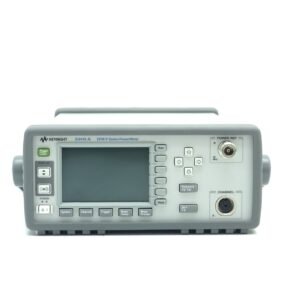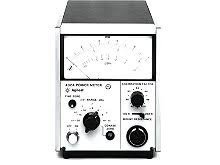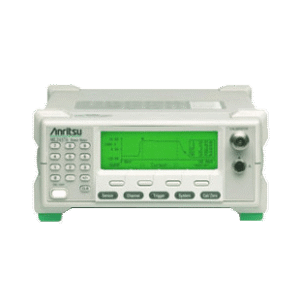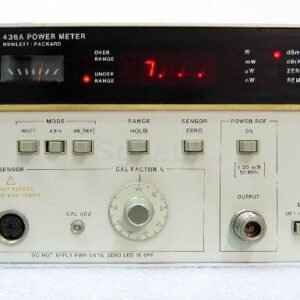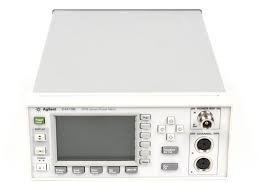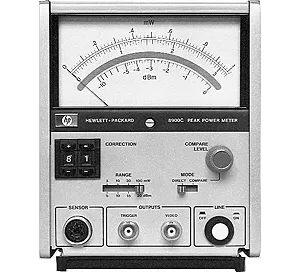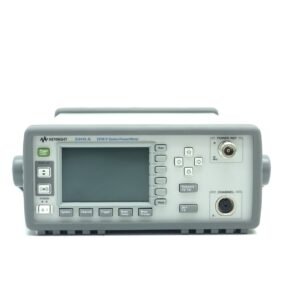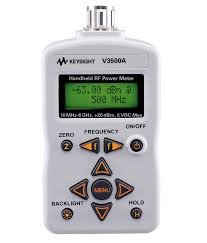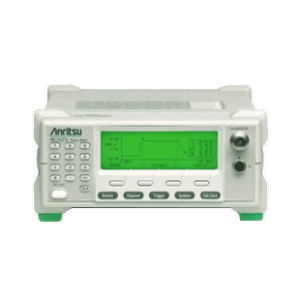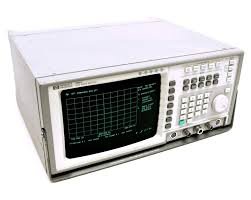

The Rohde & Schwarz NRVD is a dual-channel RF power meter engineered for precise power measurements from DC to 40 GHz. Operating as two independent measuring instruments within a single unit, it delivers simultaneous measurements across different frequencies—a capability that significantly enhances measurement efficiency in R&D, manufacturing, and service environments. The instrument measures power across a dynamic range spanning 100 pW to the kW range and supports power, level, voltage, attenuation, and reflection measurements.
Technical Specifications
• Dual-channel operation with independent measurement capability
• Frequency range: DC to 40 GHz
• Power measurement span: 100 pW to kW range
• Measurement types: Power, level, voltage, attenuation, and reflection
• Analog output: 12-bit resolution with selectable scaling per channel
• Digital filtering: 13 selectable filters for noise suppression (manual or automatic)
– Key Features
• “Plug and play” sensor operation with automatic parameter recognition
• Supports NRV-Z series thermal, diode, and peak power sensors plus URV5-Z voltage probes
• Sensor interchangeability without measurement accuracy degradation
• LC display with dual-channel digital readouts and bargraph indicator
• Menu-guided interface with softkey control
• 20 instrument setups storable with write protection
• Frequency input via keyboard, IEC/IEEE bus, or frequency-proportional DC voltage
• Integrated sensor testing generator
– Interfaces & Integration
• IEC/IEEE bus interface with SCPI command compliance
• Optional URV5 compatibility
• Trigger input and ready output for measurement automation
• DC frequency input for external frequency control
• Analog outputs suitable for recorder connection or external control
• Full remote control of measuring and setting functions
– Typical Applications
The NRVD addresses demanding measurement requirements in RF and microwave environments. When used with an SWR bridge and appropriate sensors, it directly indicates reflection coefficient, SWR, and return loss—making it suitable for antenna characterization, component testing, and transmission line analysis.