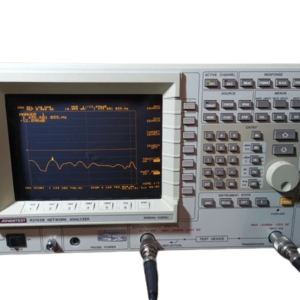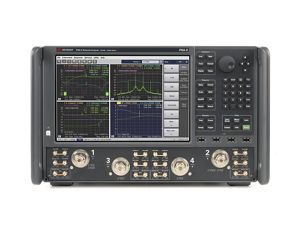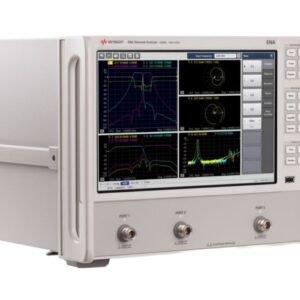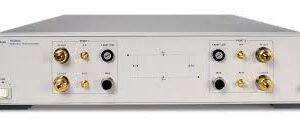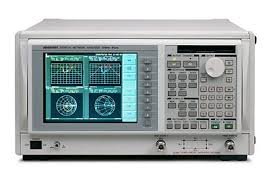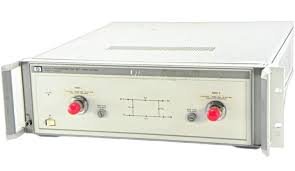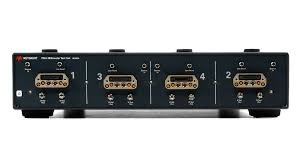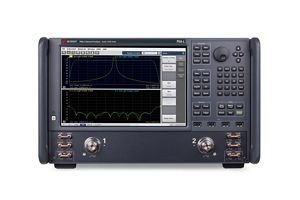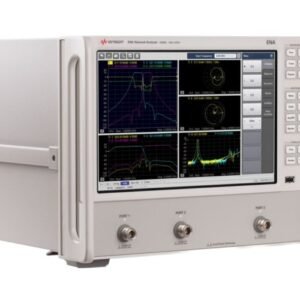
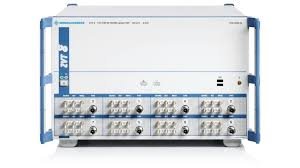

The Rohde & Schwarz ZVT8 is a multiport vector network analyzer operating from 300 kHz to 8 GHz, configurable with 2 to 8 test ports in a single unit. Each port includes a dedicated reflectometer with independent generators for port pairs, enabling simultaneous measurement of all signal paths. This architecture delivers eight-port measurements in 8 ms and captures 201 points in 5 ms, making it ideal for production testing, quality assurance, and R&D of complex multiport devices. The instrument supports manual lab operation and automated integration via IEC/IEEE bus or LAN interfaces.
Technical Specifications
• Frequency Range: 300 kHz to 8 GHz
• Configurable Ports: 2 to 8 test ports per unit
• Dynamic Range: >120 dB at test ports; up to 140 dB at 10 Hz IF bandwidth
• Output Level: +13 dBm typical; -40 dBm to +13 dBm sweep range
• Sensitivity: -110 dBm at 10 Hz measurement bandwidth
• IF Bandwidths: 1 Hz to 1 MHz standard; up to 30 MHz with restrictions
• Measurement Speed: <2 µs per point; 201-point capture in 5 ms; 8-port measurement in 8 ms
• Channel Switching: <1 ms between channels
• Setup Switching: <10 ms for configurations up to 2001 points
• Data Transfer: <1.3 ms (VX11) or <0.7 ms (RSIB) for 201 points via 100 Mbit/s LAN
• Maximum Points per Trace: 60,001
• Channels & Traces: Virtually unlimited (RAM dependent)
• Power Consumption: 650 W maximum
• Operating System: Windows XP Embedded
• Port Bias: DC power input via inner conductor (one input and fuse per RF port, BNC connectors)
– Key Features
• First network analyzer with up to eight test ports in single unit
• Each port equipped with VSWR bridge, measurement receiver, and reference receiver
• Independent generator for each port pair
• Simultaneous multiport measurement capability reduces test time for complex devices
– Typical Applications
• Research and development of RF/microwave components
• Production testing of multiport devices
• Quality assurance and validation
– Compatibility & Integration
Remote control via IEC/IEEE bus or LAN interfaces enables integration into automated test systems.