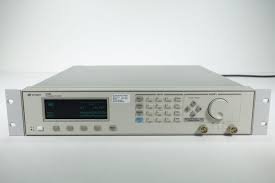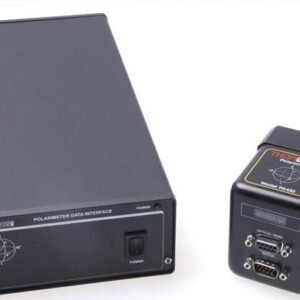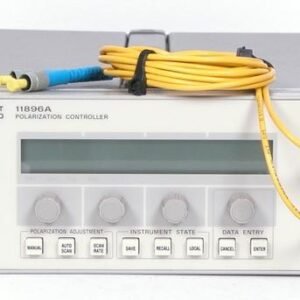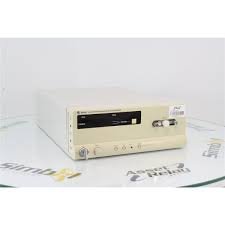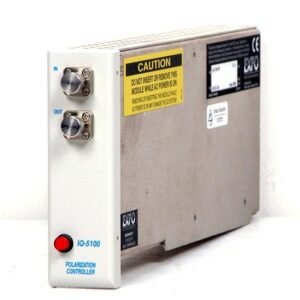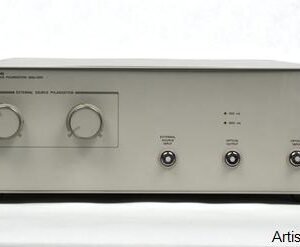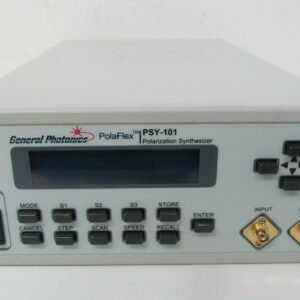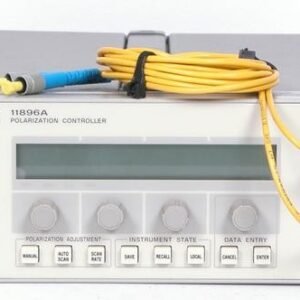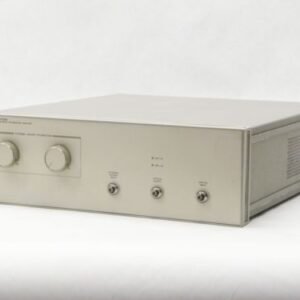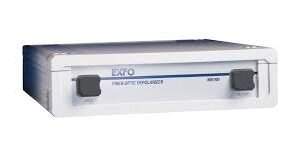
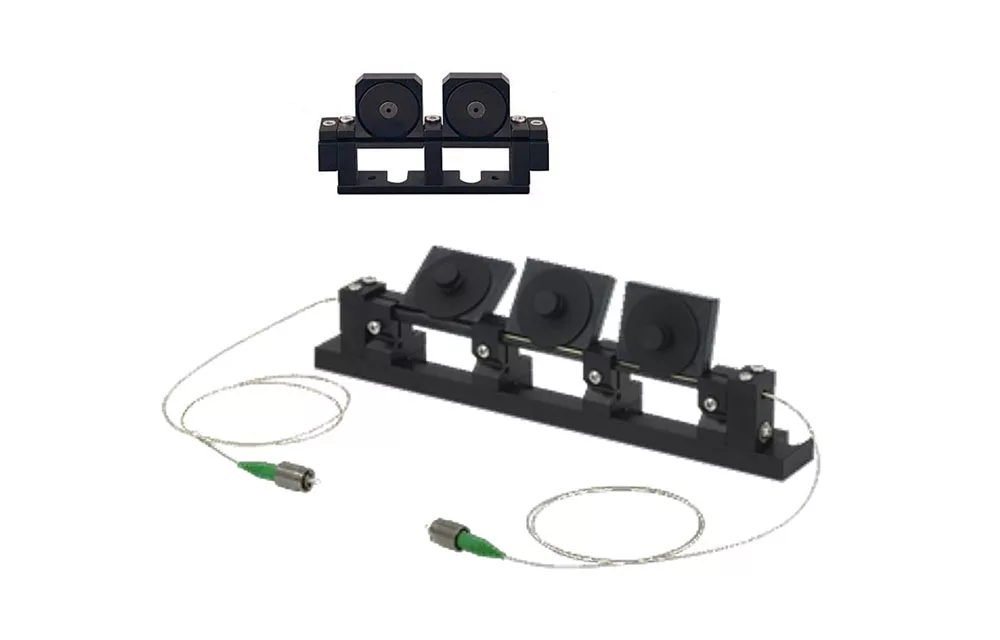

The TELECONNECT Manual Polarization Controller is a precision fiber-optic instrument for manual adjustment and optimization of light polarization states in sensitive optical systems. It employs stress-induced birefringence—created by mechanical fiber compression via adjustable paddles or squeezer mechanism—to function as an all-fiber Babinet-Soleil compensator. Users continuously control both retardance and birefringence axis orientation, enabling conversion of arbitrary input polarization states to any desired output. Manual adjustment mechanisms typically employ two or three paddles acting as fractional waveplates for comprehensive Poincaré sphere coverage. The controller delivers extinction ratios exceeding 40 dB with insertion loss typically below 0.5 dB—some models achieve as low as 0.05 dB—and return loss ranging from >45 dB to >65 dB. Designed for laboratory research and field deployment across diverse optical applications.
Technical Specifications
• Wavelength Range: Models available for 1260–1650 nm, 400–2200 nm, 1250–1350 nm, 980–1310 nm, 1510–1620 nm, 780–970 nm, and 980–1650 nm
• Fiber Type: Single Mode (SM) fiber; bare fiber (Ø250 µm) and tight-buffered fiber (Ø900 µm) accommodated in select models
• Extinction Ratio: >40 dB typical
• Insertion Loss: <0.5 dB typical; specialized models achieve 45 dB to >65 dB
• Operating Temperature: −40°C to +85°C (select models 0°C to +50°C)
• Storage Temperature: −40°C to +85°C (select ranges −20°C to +70°C or −40°C to +70°C)
– Key Features
• Manual control via rotatable paddles or fiber squeezer
• Stress-induced birefringence for variable waveplate functionality
• Low insertion loss across supported bands
• High extinction and return loss performance
• Wide temperature operating envelope
– Typical Applications
• Polarization state optimization in fiber-coupled systems
• Laboratory polarization research and characterization
• Field deployment in optical test environments
• Signal conditioning in polarization-sensitive measurements
– Compatibility & Integration
Available configurations support single-mode fiber with bare or tight-buffered jacketing. Multiple wavelength band options enable integration across C-band, L-band, S-band, and extended telecom windows.