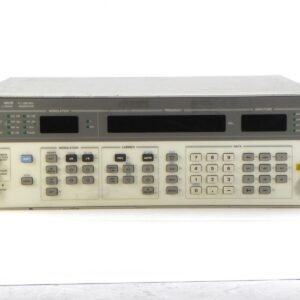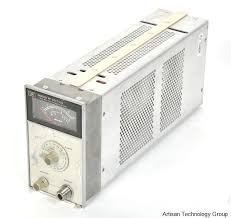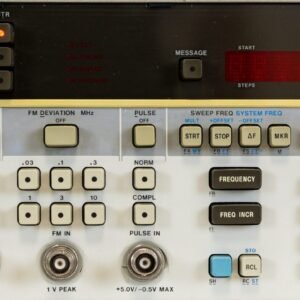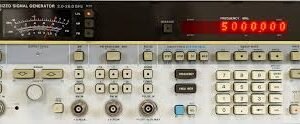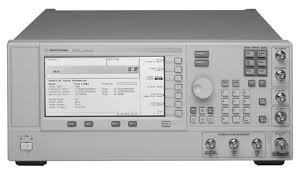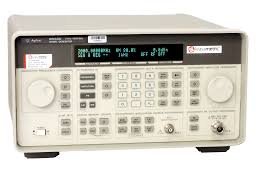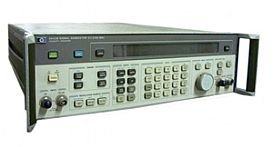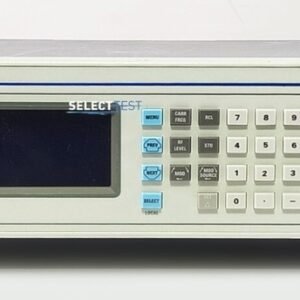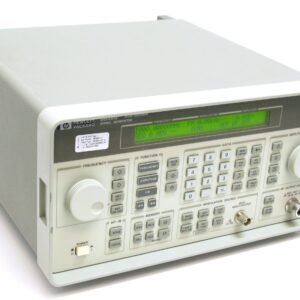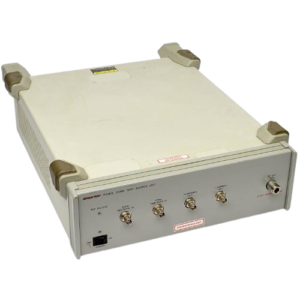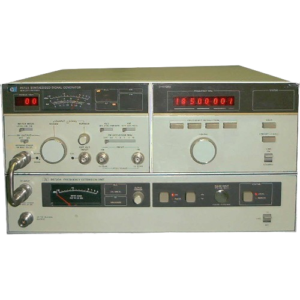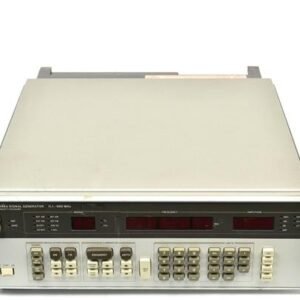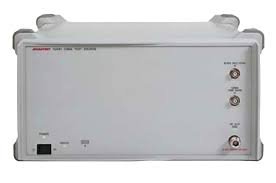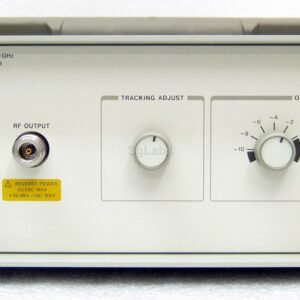
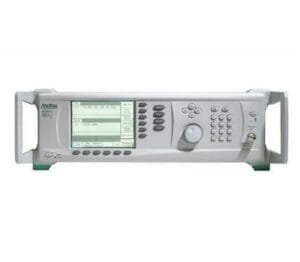

The Anritsu 68085B is a synthesized continuous wave (CW) generator engineered for high-precision signal generation across microwave and millimeter-wave frequencies. Operating from 0.5 GHz to 60.0 GHz, it delivers ultra-low single sideband phase noise of –100 dBc at 10 kHz offset from 10 GHz and output power ranging from –125 dBm to +17 dBm. The instrument combines frequency stability with flexible modulation and sweep capabilities, making it suitable for component characterization, system validation, and manufacturing test environments.
Technical Specifications
Frequency Range: 0.5 GHz to 60.0 GHz
Output Power: –125 dBm to +17 dBm
Phase Noise: –100 dBc/Hz SSB at 10 kHz offset from 10 GHz
Modulation: AM, FM, ØM, and pulse modulation. User-downloaded complex modulation supported.
Sweep Modes:
• Step sweep: 1 to 10,000 steps; step size 1 kHz to full range (0.1 Hz with Option 11); dwell 1 ms to 99 seconds; switching <15 ms + 1 ms/GHz or <40 ms (typical maximum)
• Analog sweep with independently selectable width from 1 kHz to full range
• Manual sweep with phase-locked frequency adjustment
• Alternate sweep mode between two ranges with optional independent power levels
Display and Control: Large high-resolution TFT color LCD; USB, GPIB, and LAN connectivity; SCPI programming support; ANRITSU 680XXB LabWindows Instrument Driver available
– Key Features
• Phase-locked performance across all sweep modes and step sizes
• Broad dynamic range enabling both weak-signal and high-power applications
• Internal modulation library with custom waveform capability
• Fast frequency switching under 40 ms typical for rapid stepping
– Typical Applications
Microwave component testing, receiver and amplifier characterization, phase noise assessment, receiver sensitivity evaluation, manufacturing and field service.
– Compatibility & Integration
SCPI command interface enables remote control and integration into automated test systems. LabWindows driver support facilitates PC-based instrument control. Standard laboratory and ATE connectivity via USB, GPIB, and LAN.