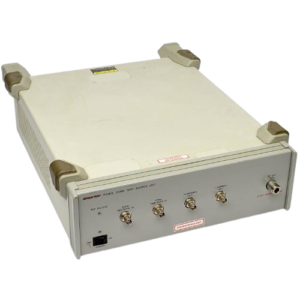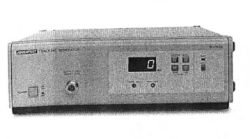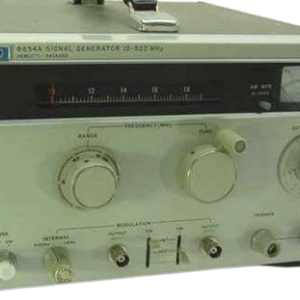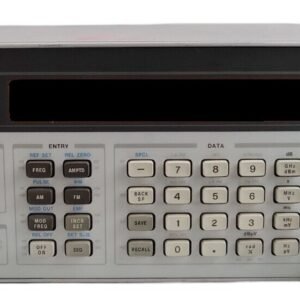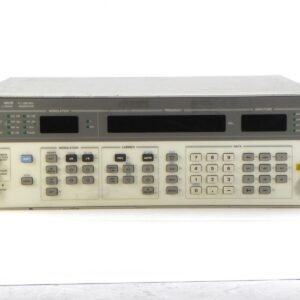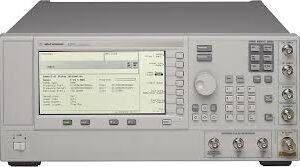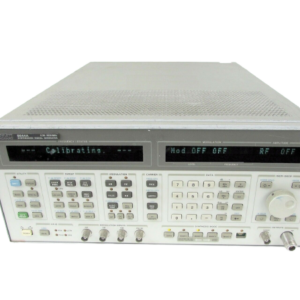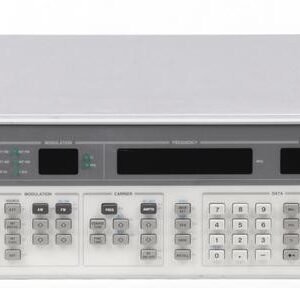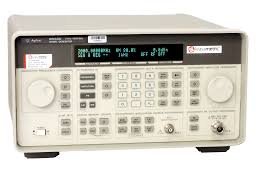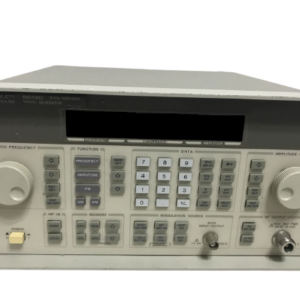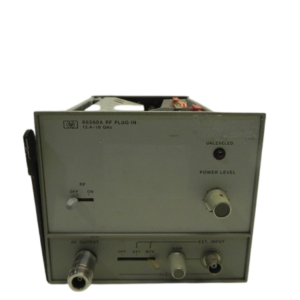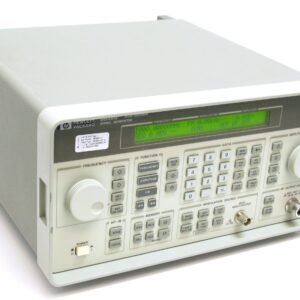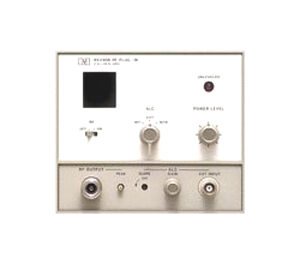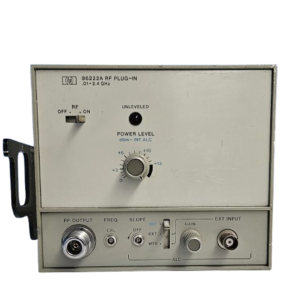
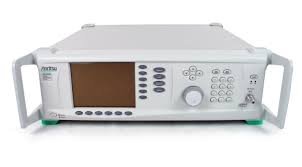

The Anritsu MG3691B is a synthesized signal generator spanning 10 MHz to 10 GHz, delivering stable, precise RF output with meticulous amplitude control. Engineered for laboratory, production, and research environments, it addresses diverse RF testing requirements in modern communication systems with high frequency resolution, low phase noise, and flexible modulation capabilities.
Technical Specifications
Frequency Performance
• Frequency range: 10 MHz to 10 GHz
• Frequency resolution: 1 Hz minimum
• Frequency accuracy: ±5 × 10⁻⁷ per hour (typical)
Output Characteristics
• Output level range: -130 dBm to +13 dBm
• Output level resolution: 0.1 dB steps
• Output level accuracy: ±1.0 dB typical at +10 dBm, 1 GHz
• Output impedance: 50 Ω
• RF connector: Type N female
Signal Quality
• Harmonic distortion: -30 dBc or better at +10 dBm output, 1 GHz
• Spurious output: -60 dBc or better at +10 dBm output, 1 GHz
• Phase noise: -110 dBc/Hz at 1 kHz offset (typical, 1 GHz carrier, -10 dBm output)
Modulation
Internal modulation available at 1 kHz and 400 Hz for AM (0–100% depth), FM (0–100 kHz deviation), and PM (0–10 radians peak).
Sweep Capability
Linear and logarithmic frequency sweep with adjustable level sweep and sweep time.
– Key Features
• Precise 1 Hz frequency resolution across a decade-spanning range
• Wide dynamic range: -130 dBm to +13 dBm output capability
• Multiple modulation modes (AM, FM, PM) with internal low-frequency sources
• Excellent phase noise performance for sensitive receiver testing
• GPIB (IEEE-488) interface for remote programming and automation
– Typical Applications
Component characterization, receiver sensitivity and selectivity testing, transmitter power and spectral purity validation, communication standard compliance verification, and system integration testing where stable, low-noise RF sources are required.
– Compatibility & Integration
GPIB control interface enables integration with automated test systems and laboratory equipment suites. 50 Ω output impedance matches standard RF testing infrastructure. AC power requirement: 100/120/220/240 VAC ±10%, 50/60 Hz; 300 VA typical consumption.