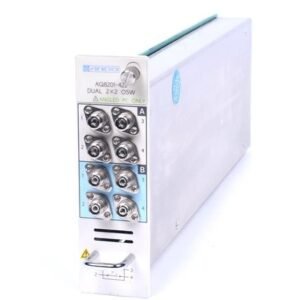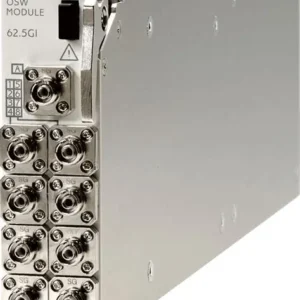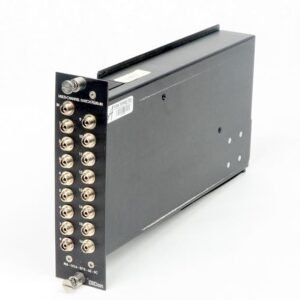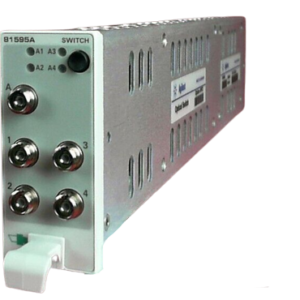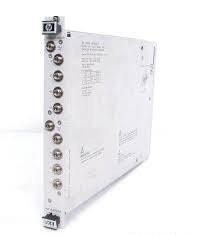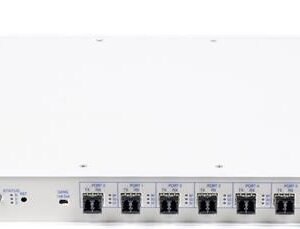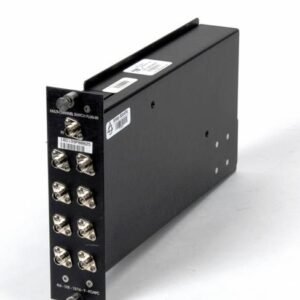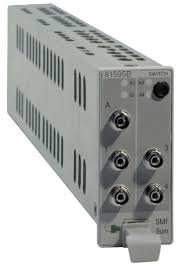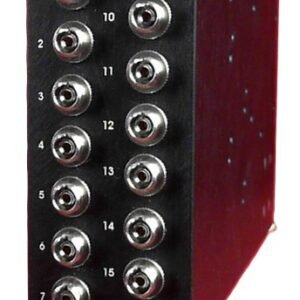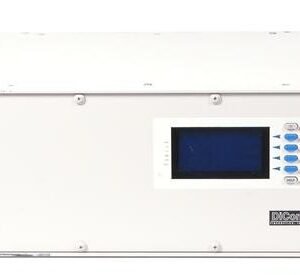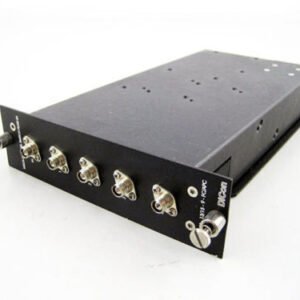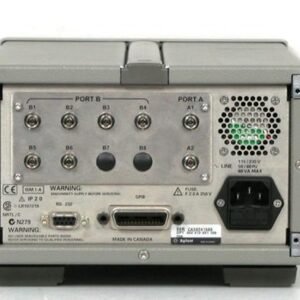
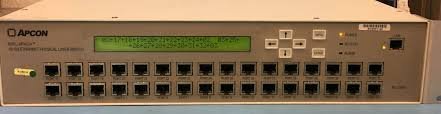

The Apcon IntellaPatch 32-Port Intelligent Fiber Optic Patch Panel (ACI-2050-C32) is a non-blocking Layer 1 switch that automates fiber optic network connectivity without manual cable intervention. It delivers remote-controlled port reconfiguration, signal regeneration, and media conversion across multiprotocol environments—from legacy SONET/SDH to modern 10 Gbps Ethernet. Wire-once deployment combined with CONTROL™ and AUTOSWITCH™ software enables automated scheduling, configuration storage, and centralized management across distributed test labs and enterprise networks.
Technical Specifications
• Port Configuration: 32 non-blocking Layer 1 ports
• Data Rates: 10 Mbps to 10 Gbps (blade-dependent)
• Supported Protocols: Ethernet (10 Mbps–10 Gbps), Fibre Channel (1 Gbps, 2 Gbps, 4 Gbps), SONET/SDH (OC-3, OC-12, OC-48), FDDI, T1/E1/J1, DS3/E3/STS-1, ESCON, Multi-Rate Multi-Protocol
• Transceiver Support: SFP and XFP; fiber optic (multimode or single-mode duplex LC); copper (RJ45, RJ48c, mini-BNC)
• Connectivity Modes: Point-to-point (full duplex), multicast (1 to N), loop configurations
• Media Conversion: Copper-to-fiber and multimode-to-single-mode conversion via modular blade design
• Signal Regeneration: Optical and copper signal regeneration to extend connection distances
– Key Features
• Modular, hot-swappable blades for flexible protocol and port scaling
• Configuration memory stores up to 16 frequently used setups
• Port naming for device identification and test asset tracking
• Auto-ranging power input: 90 V AC to 240 V AC
• Redundant, hot-swappable power supplies (chassis model-dependent)
– Management & Control
• Network Management: TCP/IP via 10/100/1000 Base-T Ethernet (RJ-45); user-configurable IP, subnet mask, gateway
• Serial Control: RS-232 ports for device management and daisy-chain multi-switch operation
• Software Integration: APCON CONTROL™ and AUTOSWITCH™ for remote access, automation, and scheduling
• Command-Line Tools: Windows, Solaris, and Linux utilities
– Typical Applications
• Automated test lab reconfiguration for multiprotocol validation
• Enterprise network maintenance without service interruption
• Signal regeneration and protocol bridging in long-distance test environments
• Multi-technology network emulation and failover testing