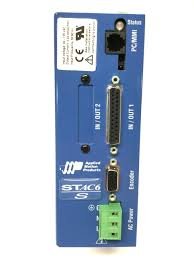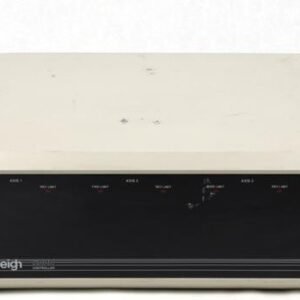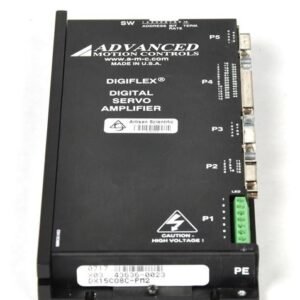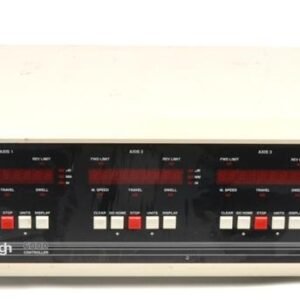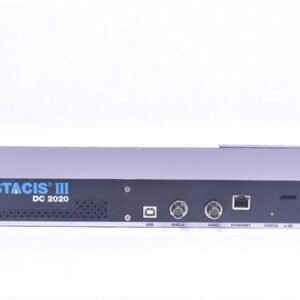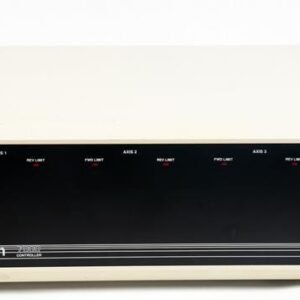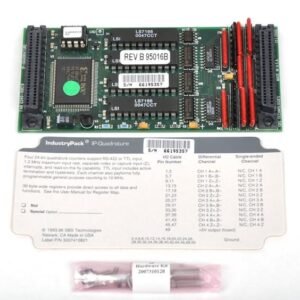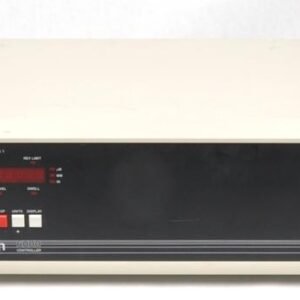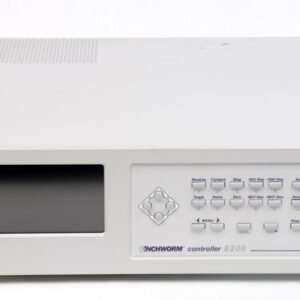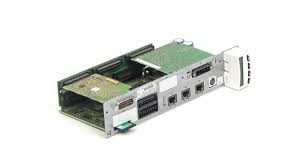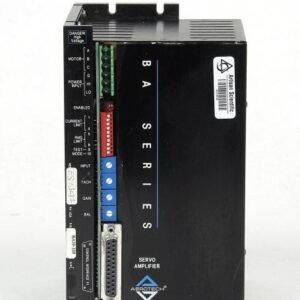
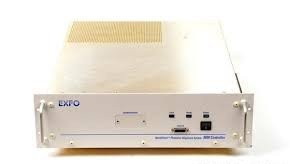

The EXFO 8600 Inchworm Controller is a precision motion control system engineered for sub-micron positioning accuracy in optical component testing and manufacturing. It commands up to six axes per chassis using patented Inchworm® motor technology, delivering nanometer-scale positioning steps without backlash or mechanical drift. The controller supports open- and closed-loop operation, automatic motor recognition, and multiple control interfaces for both manual and remote operation.
Technical Specifications
• Axis Control: Up to six axes per chassis
• Motor Compatibility: IW-800 series Inchworm motors (with or without shaft encoders), TSE-820 series integrally encoded stages, UHV series motors
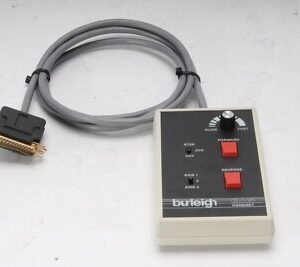
• Control Modes: Open-loop (manual handset, joystick, TTL signals) and closed-loop (encoder feedback with step size, position display, zero point setting, position maintenance)
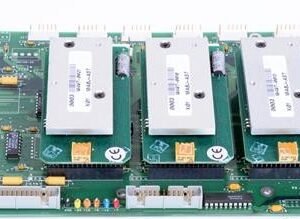
• Automatic Motor Recognition: Connected motors detected upon power-up
• Rotational Motion: Tangent radius input and selectable angular units for display
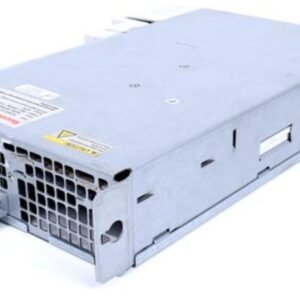
• Power Supply: Universal 90-260 V AC, 50/60 Hz
• Electrical Performance: Low radiated noise, high electrical immunity, CE compliant
– Key Features
• Piezoelectric (PZT) ceramic actuator technology for high-resolution linear positioning
• Sequential activation of three PZT elements (two clamps, one expanding/contracting) for smooth motion across extended ranges
• Front panel controls with optional handset or joystick
• RS-232 serial interface for remote control
• Optional GPIB interface for automated systems
• TTL signal compatibility for integrated automation
– Typical Applications
• Optical fiber positioning and alignment
• Precision optical component testing
• Manufacturing process automation requiring sub-micron accuracy
• Laboratory instrumentation with multi-axis motion requirements
– Compatibility & Integration
The controller integrates directly with IW-800 and TSE-820 motor families, UHV series actuators, and standard laboratory control systems via RS-232 or GPIB protocols. Manual operation supports handsets and joysticks; automated systems interface through TTL signals.