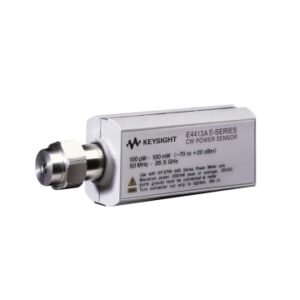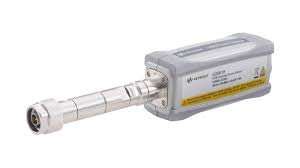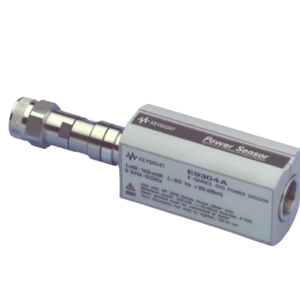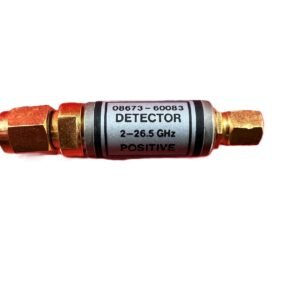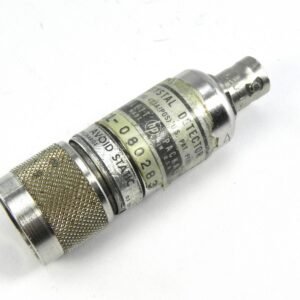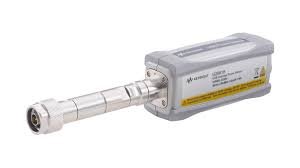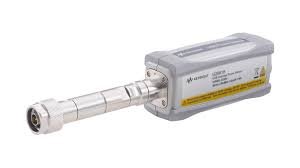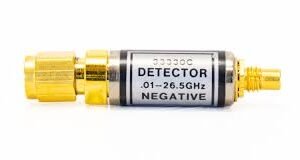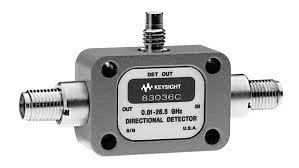
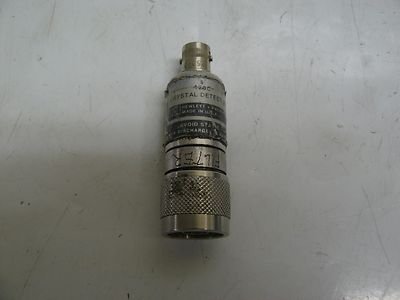

The Hewlett Packard 420C is a broadband crystal detector engineered for sensitive detection and measurement of microwave signals across a wide frequency span. It converts microwave energy into measurable DC voltage via a point-contact semiconductor diode, enabling precise power measurements in laboratory and field applications. The detector delivers repeatable performance with low noise and configurable output polarity, making it suitable for both general-purpose signal detection and specialized measurement tasks.
Technical Specifications
Frequency Range: 0.01 GHz to 12.4 GHz
Sensitivity
• Low-level: >0.15 mV/µW
• CW: >0.4 mVdc/µW
• With load resistor: 0.1 mV/µW
Input Impedance: 50 ohms
Output Impedance: 15 kΩ shunted by 10 pF
Reflection Coefficient (SWR)
• 10 MHz to 4.5 GHz: 0.091 (1.2 SWR)
• 4.5 GHz to 7.0 GHz: 0.15 (1.35 SWR)
• 7.0 GHz to 12.4 GHz: 0.2 (1.5 SWR)
Maximum Power Input: 100 mW peak or average; 0.1 W short-term (<1 min)
Frequency Response: ±2 dB overall. With video load: <0.5 dB variation from square law over ≥30 dB dynamic range to 50 mV peak output into 75 kΩ external load. Temperature coefficient: 0.015 dB/°C (0°C to 55°C)
Output Noise: 200 µV peak-to-peak
Output Polarity: Negative standard; positive available (Option 03)
Detector Element: Point-contact type, field-replaceable
Connectors
• Input: Type N (male or female per option)
• Output: BNC female
Physical: 4.5 inches (144 mm) overall length
– Key Features
• Flat ±2 dB response across 0.01–12.4 GHz
• Low reflection coefficient enabling minimal signal disturbance
• Square-law conformance option for envelope detection applications
• Field-replaceable point-contact diode element
• Configurable connector and polarity options
– Typical Applications
• Pulse envelope observation and demodulation via oscilloscope
• Microwave signal detection and power measurement
• Reflectometer component integration
• Harmonic-frequency comparison measurements using mixer configuration
– Compatibility & Integration
Standard Type N input connector (male or female) accommodates industry-standard waveguides and coaxial transmission lines. BNC output enables direct connection to oscilloscopes, high-impedance measurement instruments, and signal-processing equipment. Matched-pair option (001) and video-load option (002) support demanding measurement scenarios. Stainless steel connector versions (options 012, 013) extend operational durability in demanding RF environments.