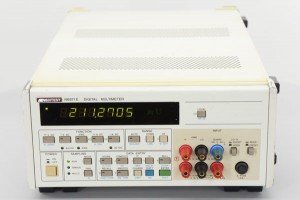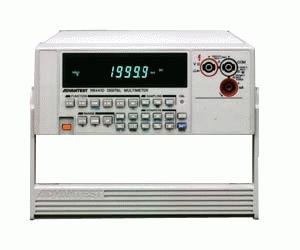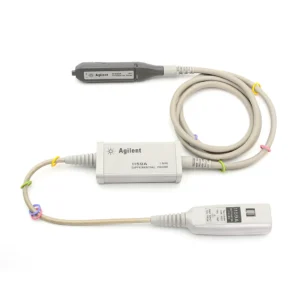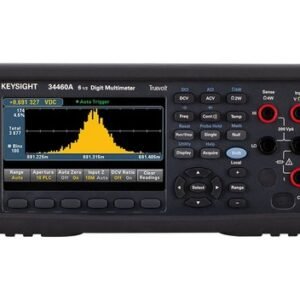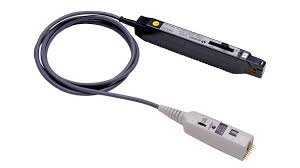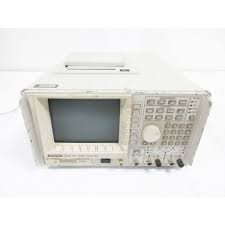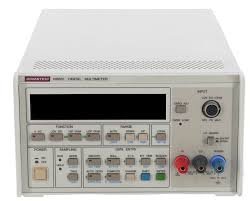
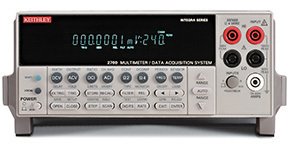

The Keithley 2790-HH E Sourcemeter Switch System combines high-performance voltage and current sourcing with integrated measurement capabilities in a single automated test platform. This enhanced configuration integrates sourcemeter functionality with a multi-channel switch system for precision characterization of electronic components and circuits. The system delivers both sourcing and measurement in one consolidated instrument, eliminating the need for separate equipment and simplifying test setup complexity.
Technical Specifications
Programmable Constant Voltage Source
• Range: 50 V to 500 V
• Programming Resolution: 100 mV
• Accuracy: 0.5% + 0.1 V (2 yr specification)
• Maximum Output Current: 50 µA (rated accuracy); <1 mA typical into short circuit
• Rise Time (50 V to 500 V step, 0.1% settling): 250 ms maximum
• Temperature Coefficient (0–18°C & 28–40°C): (0.001% + 0.005 V)/°C
• Safety Limit: 1 mA maximum (impedance-limited, 7751/7753 modules)
• Cable Discharge (Channel 20): 100 kΩ shunt; maximum capacitance 1 nF
Programmable Constant Current Source
• Range: 0–50 mA (module-dependent variants available: 7751: 0–50 µA; 7753: 0–500 µA)
• Programming Resolution: 10 µA
• Output Voltage Compliance: 5.5 V ± 10%
• Accuracy: 0.06% + 10 µA (2 yr specification)
• Settling Time: 1 ms to 0.1% of final value (typical)
• Temperature Coefficient (0–18°C & 28–40°C): (0.001% + 0.25 µA)/°C
• Dry Circuit Clamp (Channel 24): 20 mV ± 10% with Isource ≤ 1 mA
Resistance Measurement
• High Resistance (Source V): 1 MΩ to 1 GΩ using forced constant-voltage method
• Low Resistance (Source I): <1 kΩ using forced constant-current method
• Low-resistance accuracy examples:
– 50 mA source: 20 Ω (0.09% + 2 mΩ)
– 20 mA source: 50 Ω (0.11% + 5 mΩ)
– 10 mA source: 100 Ω (0.16% + 10 mΩ)
– 1 mA source (Dry Circuit): 10 Ω (1.10% + 50 mΩ)
– Key Features
• Multi-channel switch integration for parallel device characterization
• Integrated DMM enables simultaneous sourcing and measurement
• Wide voltage range supports both low and high voltage component testing
• Low-current source options for sensitive device characterization
• Precision resistance measurement across seven decades (1 Ω to 1 GΩ)
• Temperature-compensated specifications for stable operation across extended operating ranges
– Typical Applications
• Automated component and circuit characterization
• High-resistance and leakage current measurement
• Continuity and contact resistance verification
• Multi-point device testing via integrated switch matrix
• Production test and quality assurance for semiconductor and passive components