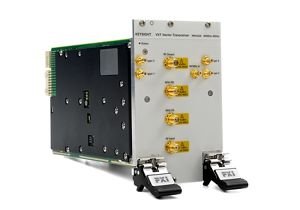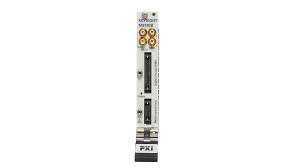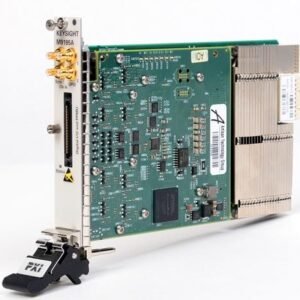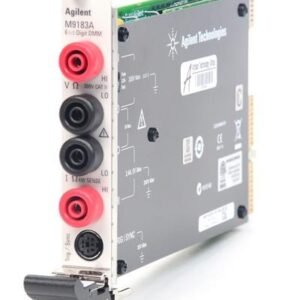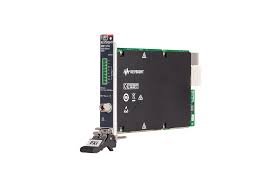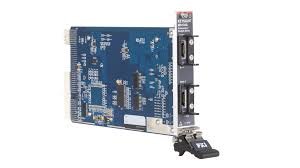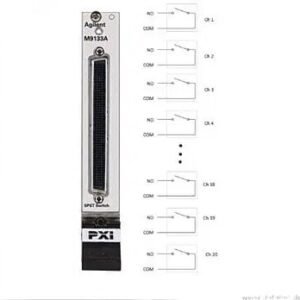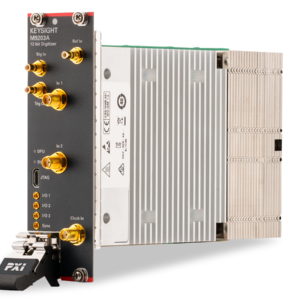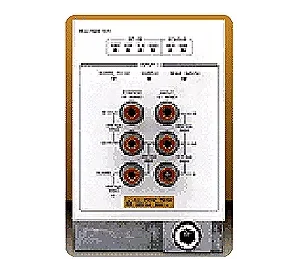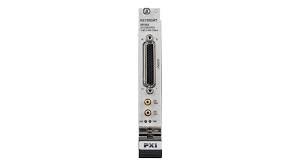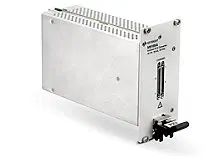

The NI PXI-6225 is a multifunction M Series data acquisition module engineered for PXI systems requiring simultaneous analog input, analog output, and digital I/O capabilities. Built on NI-STC 2 system controller, NI-PGIA 2 programmable amplifier, and NI-MCal calibration technology, it delivers precise measurements for automated testing, data logging, research, design verification, and manufacturing test environments.
Technical Specifications
Analog Input
• 40 differential or 80 single-ended channels
• 16-bit resolution with no missing codes guaranteed
• 250 kS/s maximum sampling rate (single channel and aggregate)
• Input ranges: ±0.2 V, ±1 V, ±5 V, ±10 V
• 92 dB CMRR (DC to 60 Hz)
• Input impedance: >10 GΩ in parallel with 100 pF (device on); 820 Ω (device off)
• ±100 pA input bias current
• 700 kHz small signal bandwidth (-3 dB)
• Crosstalk: -75 dB (adjacent), -90 dB (non-adjacent), -71 dB (64-channel separation)
• 50 ns timing resolution; 50 ppm timing accuracy
• 4,095-sample input FIFO; 4,095-entry scan list memory
• Overvoltage protection: ±25 V (device on), ±15 V (device off) for up to two AI pins
• Settling time: ±90 ppm (4 μs), ±30 ppm (5 μs), ±15 ppm (7 μs)
Analog Output
• 2 channels, 16-bit resolution
• 833 kS/s maximum update rate
Digital I/O and Counters
• 24 digital I/O channels
• Two 32-bit counters
• 8 correlated DIO lines at 1 MHz
• Digital triggering supported
• Static digital input/output functionality
– Key Features
• Maximum working voltage: ±11 V of AI GND
• DMA with scatter-gather transfer capability; interrupt and programmed I/O support
• USB Signal Stream and programmed I/O data transfer options
• Operating temperature: 0 °C to 55 °C (recommended); storage: -20 °C to 70 °C
– Typical Applications
Automated test systems, environmental monitoring, sensor characterization, real-time data acquisition, multi-channel signal processing, industrial process control.
– Compatibility & Integration
Full compatibility with NI-DAQmx driver software and LabVIEW for custom application development. Integrates directly into PXI chassis configurations.