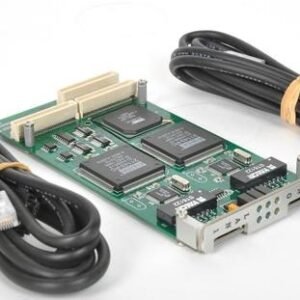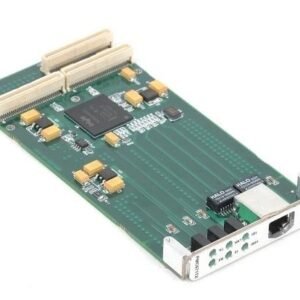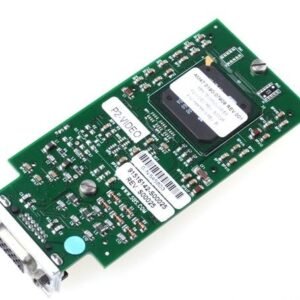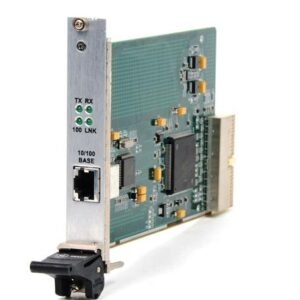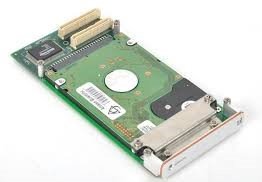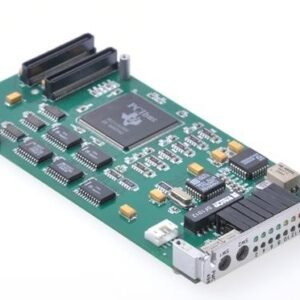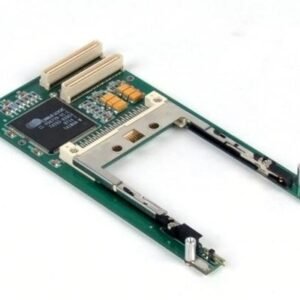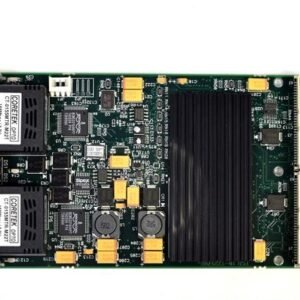
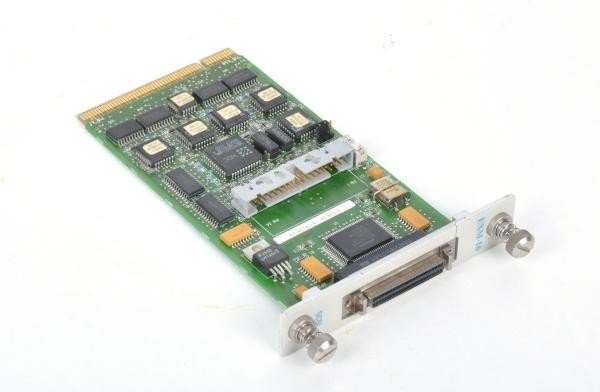

The Radisys EXM-16 is a 16-bit modular expansion interface that extends embedded PC I/O capabilities through a standardized local expansion architecture. Introduced in 1989, this SCSI controller module leverages an ISA bus-equivalent electrical design, enabling the use of standard PC software and drivers across compatible system platforms. The EXM-16 supports connection to SCSI storage devices and external floppy drives via a 34-pin connector, accommodating 5.25″ or 3.5″ drives. Up to eight EXM modules can be installed in a single embedded PC, delivering cost-effective, modular expansion without sacrificing reliability or system integration.
Technical Specifications
• Interface: EXM Expansion Interface (electrically similar to PC ISA bus)
• Data Bus Width: 16-bit
• Primary Function: SCSI Controller
• Power Supply: +5V @ 0.5 A; +12V supply also required (essential for hard disk drives)
• System Clock: 8 MHz (ISA bus compatibility)
• Oscillator Signal: 14.31818 MHz (70 ns period)
• Addressability: Up to 16 MB using LA17 through LA23 signals
• Interrupt Support: IRQ 3, 4, or 9 (for COM ports)
• Form Factor: Modular; typically 6U (VMEbus-size) for mass storage variants
– Key Features
• SCSI interface for direct storage device connectivity
• External floppy drive connector supporting both 5.25″ and 3.5″ drives
• LED indicators for power status diagnostics
• Expandable up to eight modules per embedded PC
• Software compatibility with standard PC drivers and applications
• Compatible with VME, VXI, and EMC system form factors
– Typical Applications
Embedded computing systems requiring expanded mass storage capacity, external floppy drive integration, and modular I/O extension in industrial, telecommunications, and defense environments.
– Compatibility & Integration
The EXM-16 integrates with embedded PC CPU modules via a dedicated local expansion path. Specific EPC chassis configurations may exhibit incompatibilities with certain EXM module variants; hardware verification against Radisys documentation is recommended. I/O port address assignments depend on system configuration and installed peripherals; address conflict avoidance is required during setup.