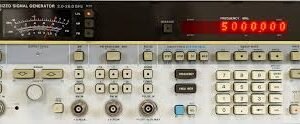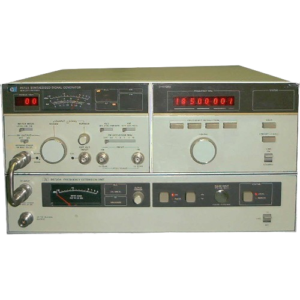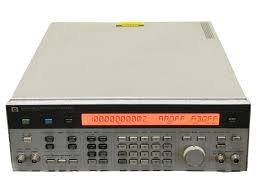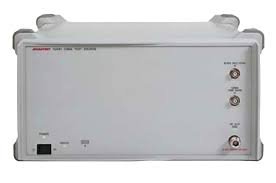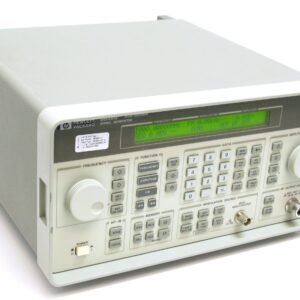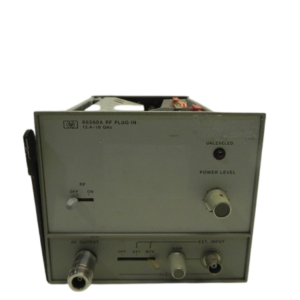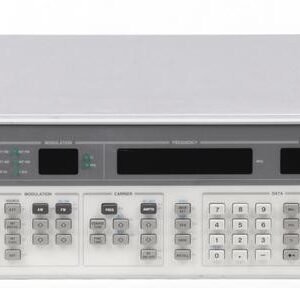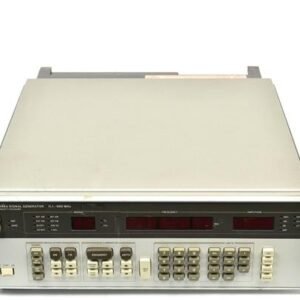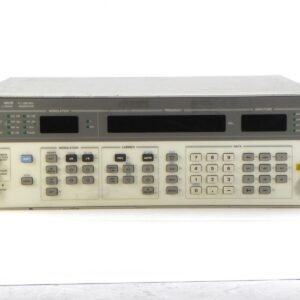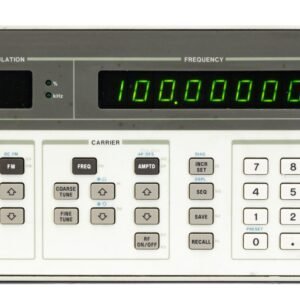
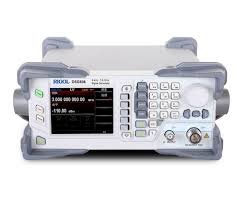

The Rigol DSG836 is a benchtop RF signal generator delivering precision signal generation across 9 kHz to 3.6 GHz. Purpose-built for research, development, manufacturing, and educational testing, it combines high signal purity with accurate amplitude control and flexible modulation to serve as a cost-effective RF source for demanding measurement applications.
Technical Specifications
Frequency Performance
• Range: 9 kHz to 3.6 GHz
• Resolution: 0.01 Hz
• Setting time: < 10 ms
• Frequency sweep: Step sweep (2 to 65535 points) and list sweep (1 to 6001 points) with triangle or ramp shapes
• Dwell time: 20 ms to 100 s
• Sweep modes: Single, continuous, with auto/key/external/bus triggering
Amplitude Control
• Output range: -110 dBm to +13 dBm (leveled), +20 dBm maximum
• Accuracy: ≤ 0.5 dB typical
• Resolution: 0.01 dB
• 72-hour stability: < 0.02 dB
• Digital ALC circuit with amplitude sweep support
Signal Quality
• Phase noise: < -112 dBc/Hz @ 20 kHz offset
• Harmonics: < -30 dBc
• Non-harmonics: -70 dBc to -54 dBc
Modulation
• Standard modes: AM, FM, phase modulation
• Pulse modulation optional (on/off ratio to 70 dB, rise/fall time < 10 ns, minimum width 10 ns)
• Internal and external modulation sources supported
Timebase & Reference
• Internal clock: 10 MHz with 1–2 ppm stability
• High-stability OCXO option: < 5 ppb stability, < 30 ppb/year aging
• Temperature stability: < 2 ppm
Connectivity
• USB and LAN interfaces standard
• SCPI command set supported
• Output connectors: N-type female, BNC female
– Key Features
• Sub-100 ms frequency switching for rapid test sequences
• Leveled output to ±0.5 dB across full frequency range
• Arbitrary frequency lists and sweep patterns via step or logarithmic spacing
• Multiple trigger modes for synchronized test automation
• Optional pulse train generation with nanosecond-class timing
– Typical Applications
Component and subsystem characterization, receiver sensitivity testing, transmitter validation, filter and amplifier measurements, and laboratory education in RF/microwave fundamentals.
– Compatibility & Integration
Remote instrument control via standard USB and LAN connections using SCPI commands. Integrates into automated test systems and benchtop measurement setups without additional interfaces.