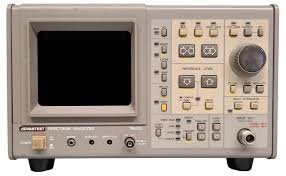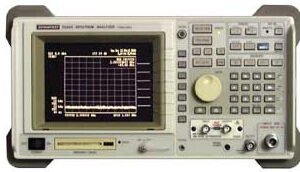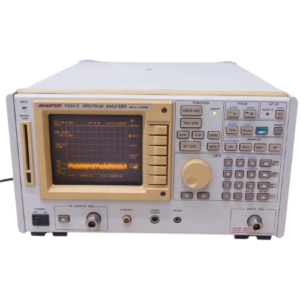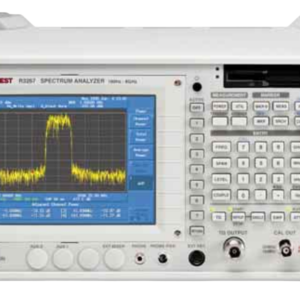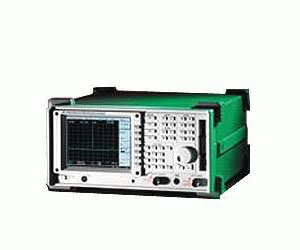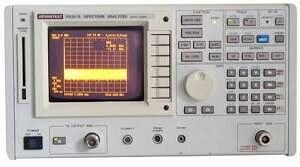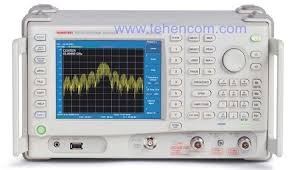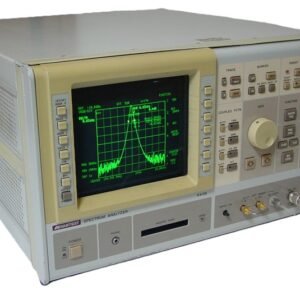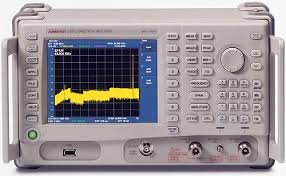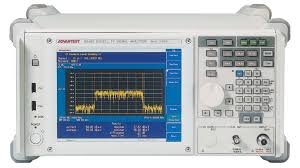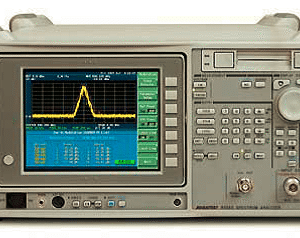
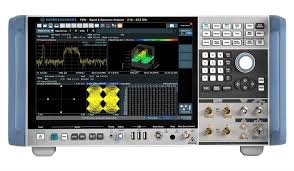

The Rohde & Schwarz FSW13 is a high-performance signal and spectrum analyzer engineered for demanding RF measurement tasks from 2 Hz to 13.6 GHz. It delivers superior dynamic range, low noise floor, and exceptional phase noise performance for precise characterization of complex signals. The instrument combines DC and AC coupling modes, configurable real-time analysis bandwidth up to 512 MHz, and measurement uncertainty under 0.04 dB at 8 GHz—making it ideal for component verification, signal development, and laboratory-grade spectral analysis.
Technical Specifications
Frequency Range: 2 Hz to 13.6 GHz (DC coupled); 10 MHz to 13.6 GHz (AC coupled)
Analysis Bandwidth: Up to 512 MHz real-time, with options including 40 MHz, 160 MHz, 320 MHz, 1200 MHz, 2000 MHz, 2001 MHz, 4001 MHz, 5000 MHz, 6001 MHz, and 8001 MHz
Displayed Average Noise Level (DANL):
• 2 GHz: −156 dBm (1 Hz) typical; −159 dBm (1 Hz) with R&S®FSW-B13
• 8 GHz: −156 dBm (1 Hz) typical
• 20 GHz: −150 dBm (1 Hz) typical
• With preamplifier (R&S®FSW-B24): 8 GHz −169 dBm; 20 GHz −166 dBm (1 Hz)
Phase Noise:
• 1 GHz carrier, 10 kHz offset: −137 dBc (1 Hz) typical
• 10 GHz carrier, 10 kHz offset: −128 dBc (1 Hz) typical
Measurement Uncertainty: < 0.04 dB at 8 GHz
Dynamic Range: WCDMA ACLR dynamic range of 88 dB with noise cancellation; unparalleled spurious measurement range via low DANL
Maximum Input Power:
• f < 1 GHz: +30 dBm typical
• f < 3 GHz: +25 dBm typical
• 3 GHz 8 GHz: +7 dBm nominal (RF attenuation = 0 dB, preamplifier off)
Resolution Bandwidth: 1 Hz to 10 MHz in 1/2/3/5 sequence; optional 20 MHz, 50 MHz, 80 MHz with R&S®FSW-B8
Frequency Reference Aging: ±1 × 10⁻⁷/year
Bandwidth Uncertainty: < 3% nominal
Shape Factor (60 dB:3 dB): < 5 nominal
– Key Features
• Selectable real-time bandwidth options for adaptive measurement resolution
• Low phase noise across 1 GHz to 10 GHz range for sensitive detection
• Optional preamplifier extends sensitivity to −169 dBm at 8 GHz
• Independent receive path optimizes dynamic range up to 1 GHz
• DC coupling enables measurement from ultralow frequencies
– Typical Applications
• Spurious and harmonic emissions analysis
• Adjacent channel leakage ratio (ACLR) verification for wireless devices
• Complex signal characterization and modulation quality assessment
• Component development and validation
• Laboratory and systems integration environments