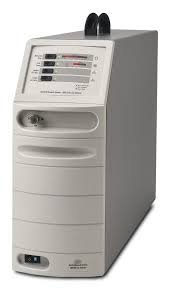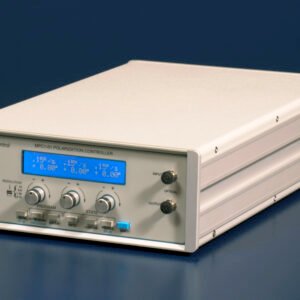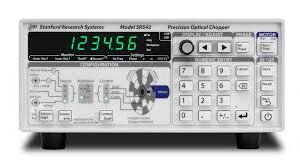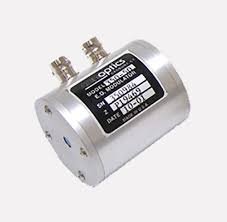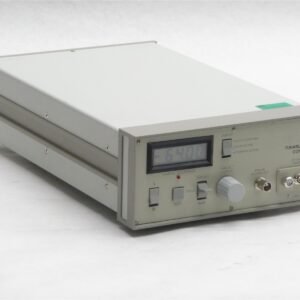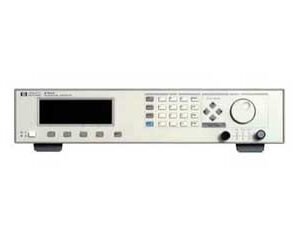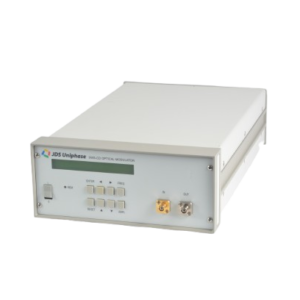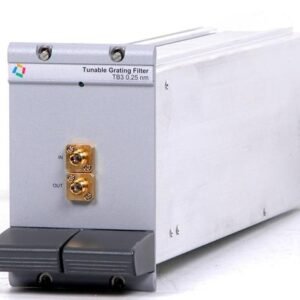

The Stanford Research O635RMD is a precision optical chopper engineered for modulating optical beams across demanding scientific and industrial applications. It delivers stable, repeatable beam modulation through a wide operating frequency range with dual output formats, enabling integration into complex optical measurement systems and experimental setups.
Technical Specifications
• Modulation Frequency: 4 Hz to 10 kHz
• Frequency Stability: <0.1% over 24 hours
• Phase Jitter: <0.5 degrees
• Phase Adjustment Range: 0–360 degrees (variable)
• Beam Aperture Diameter: 25 mm
• Output Signals: TTL and sine wave
• Power Input: 100–240 VAC, 50/60 Hz
• Physical Dimensions: 19.1 cm (W) × 12.7 cm (D) × 7.6 cm (H)
• Weight: 1.8 kg
– Key Features
The O635RMD combines frequency stability better than 0.1% over 24-hour periods with phase jitter maintained below 0.5 degrees, critical for lock-in detection and synchronous measurement techniques. Dual output capability—TTL logic levels and analog sine wave—provides flexibility for both digital and analog control circuits. The variable phase adjustment spanning 0–360 degrees enables precise temporal alignment in multi-channel optical systems.
A 25 mm beam aperture accommodates standard optical configurations while the compact 1.8 kg package permits straightforward mounting in optical benches and spectroscopic equipment.
– Typical Applications
The O635RMD serves applications including lock-in amplification, modulation spectroscopy, beam chopping for phase-sensitive detection, and synchronization in time-resolved optical measurements. Its frequency range from 4 Hz to 10 kHz covers both low-frequency mechanical measurements and high-speed optical switching requirements.
– Compatibility & Integration
Standard 100–240 VAC, 50/60 Hz operation simplifies global deployment. TTL and sine wave outputs interface directly with lock-in amplifiers, analog-to-digital converters, and digital control systems, enabling rapid integration into existing laboratory instrumentation.