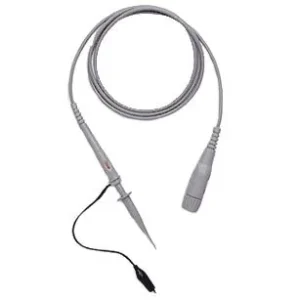
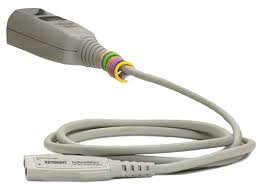
The Warner Instruments IE-210 Intracellular Electrometer is a high-impedance microelectrode amplifier for intracellular recording and stimulation via a single electrode. The system combines a compact headstage with a controller unit to deliver simultaneous bidirectional signaling with minimal noise and drift. Built for fluid-filled glass microelectrodes exceeding 100 MΩ, the IE-210 achieves 500 TΩ input resistance—5000× greater than typical electrode impedance—enabling faithful signal transduction without loading effects.
Technical Specifications
• Input Resistance: 5 × 10¹¹ Ω (500 TΩ)
• Input Capacitance: 0.5 pF (bootstrap circuitry and driven shield headstage)
• Noise Level: 0.1 Hz – 10 kHz range
• Drift: Low drift across operating conditions
• Response Time: Fast
• Output Gains: ×1 (Amplifier), ×10/×20/×50 (Bridge Balance)
• Capacity Compensation: Up to 50 pF
• Low-Pass Filter: 4-pole Bessel; frequency control via stepped DC voltage at Filter Telegraph BNC
• DC Current Source (Low Range): 0 to ±100 nA
• DC Current Source (High Range): 0 to ±1000 nA
• Breakaway Input: Up to ±200 V for iontophoretic injection
• Display: 3-1/2 digit LED meter (Amplifier Output voltage at ×1 gain; stimulus DC current)
– Key Features
• Active bridge circuit enables stimulation and recording through a single electrode without cross-talk
• External stimulus input accepts arbitrary waveforms and DC levels; current limited by electrode resistance or 0.5 µA maximum per range
• Breakaway input current = applied voltage ÷ (electrode resistance + 2 MΩ)
• Variable-frequency, variable-amplitude buzz voltage for cell impalement (remote control RB-1 available)
• Input offset and electrode test facilities for junction potential compensation and resistance monitoring
– Typical Applications
• Patch-clamp and whole-cell voltage/current-clamp electrophysiology
• Intracellular neuronal recordings with dynamic stimulation
• High-impedance microelectrode research requiring minimal signal degradation
– Compatibility & Integration
Filter Telegraph BNC output encodes filter frequency as stepped DC voltage for DAQ system integration. Headstage design minimizes stray capacitance; external breakaway input accommodates specialized iontophoretic protocols.