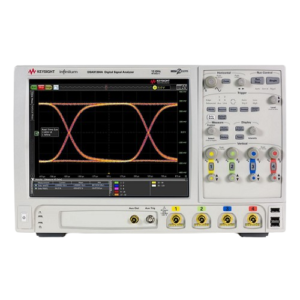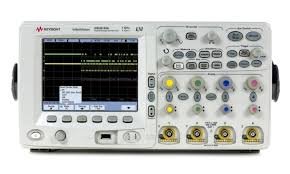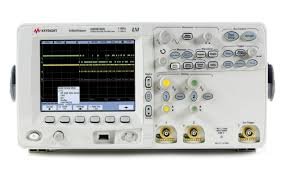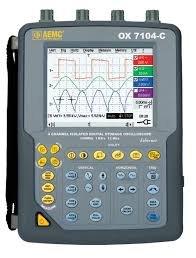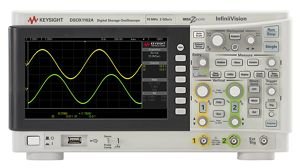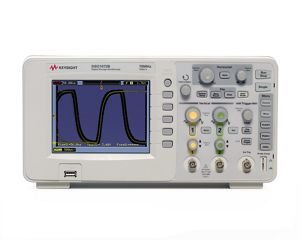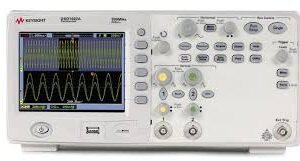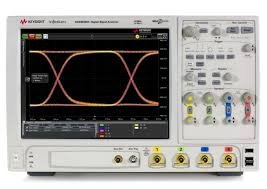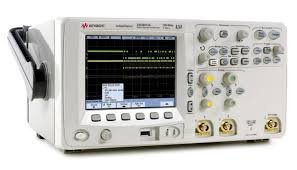

The Yokogawa DL1735E is a 4-channel digital oscilloscope delivering 350 MHz analog bandwidth for high-speed signal capture and analysis. Built on 2 MW maximum memory depth, the instrument supports all-points display and enables sequential waveform storage through history memory with smart search capability. Auto setup streamlines initial configuration, while dual interpolation modes—pulse and sine—optimize waveform reconstruction across diverse signal types.
Technical Specifications
• Analog Input Channels: 4
• Analog Bandwidth: 350 MHz
• Memory Depth: 2 MW (Mega Words)
• Sampling: High-speed data acquisition with all-points display
• Interpolation Modes: Pulse and sine
• Display: Large format screen
– Key Features
• History memory stores and sequences captured waveforms with integrated smart search
• Versatile trigger options including trigger position menu, configurable delay via SHIFT + POSITION, and selectable trigger modes
• Action on trigger setting accessible via SHIFT + MODE
• HDTV trigger support for broadcast and consumer electronics testing
• Optional I²C and SPI bus trigger and analysis for serial protocol verification
• Waveform calculations including phase shift computation (SHIFT + MATH)
• Automatic parameter measurement with statistical processing
• Cursor measurement for precise manual analysis
• X-Y display capability for Lissajous and phase relationships
• Snapshot and accumulated waveform modes for signal comparison and averaging
– Typical Applications
Electronic testing across consumer, industrial, and communications sectors; digital signal integrity analysis; serial bus debugging; HDTV signal validation; waveform characterization in development and field service environments.
– Compatibility & Integration
USB connectivity supports external memory devices (flash, HDD, MO) and peripherals (mouse, keyboard, printer). Optional Ethernet function enables web server, FTP, and network printing access. GPIB interface provides legacy equipment integration. PC Card Type II slot accommodates additional storage or floppy disk configuration. USB and Ethernet connections require dedicated PC libraries and device drivers.