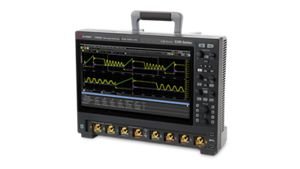
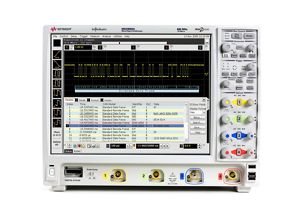
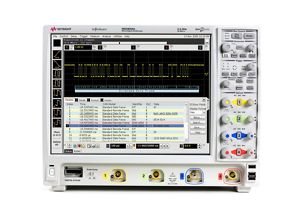
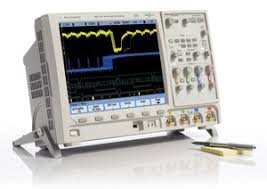
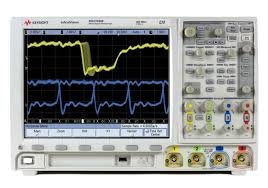
The Yokogawa DLM2032 is a 350 MHz mixed signal oscilloscope that combines digital oscilloscope and logic analyzer capabilities in a single instrument. It enables simultaneous observation and analysis of analog and digital signals—up to 3 analog channels plus 8 logic channels for a total of 11 input signals observed concurrently. The instrument excels at embedded system debugging, power electronics evaluation, and general electronic design workflows where both analog transients and digital state information must be captured together.
Technical Specifications
Analog Performance
• Bandwidth: 350 MHz
• Analog channels: 2
• Sample rate: Up to 2.5 GS/s (1.25 GS/s with 4 channels)
• Vertical resolution: 8-bit standard, up to 12-bit in high-resolution mode
• Measurement memory: Up to 125 MPoints (with /M2 option, interleave ON)
• Real-time display maintained across simultaneous multi-channel measurements via ScopeCORE fast data processing IC
Logic Analysis
• Logic channels: 8-bit
• Simultaneous analog + logic observation: Up to 3 analog + 8 logic channels
• Serial bus decoders: CAN, LIN, UART, I2C, SPI
• Advanced serial bus support: I2C, SPI, CAN, LIN, UART, FlexRay, SENT
• High-speed simultaneous analysis: Up to four different serial buses
Triggering
• Trigger types: Edge, Enhanced, B triggers
• Advanced triggering: A to B(n) trigger capability (e.g., trigger on the 7th edge of signal B)
• Serial pattern trigger: User-defined patterns up to 1
Display & Interface
• 8.4-inch LCD screen, portrait orientation
• Intuitive user interface with on-screen graphical help
Physical & Operational
• Dimensions: 226 (W) × 293 (H) × 193 (D) mm (excluding protrusions)
• Weight: Approximately 4.2 kg (without options)
• Power: 100 to 240 VAC, 50 Hz/60 Hz
• Maximum power consumption: 170 VA
• Operating temperature: 5 °C to 40 °C
– Key Features
• Simultaneous analog and digital signal capture eliminates the need for separate instruments
• Deep memory supports extended acquisition windows for complex protocol analysis
• Bus decode and trigger on serial protocols including I2C, SPI, CAN, and UART
• Portrait display orientation minimizes bench footprint
• Eight-bit logic channels integrate with analog measurement workflows
– Typical Applications
• Embedded system debugging and validation
• Power electronics characterization
• Serial communication protocol analysis and verification
• Mixed-signal circuit design and troubleshooting
– Compatibility & Integration
Optional memory expansion (/M2 option) and serial bus analysis packages (/F1 through /F9 options) extend measurement and decoding capabilities across multiple protocol standards.