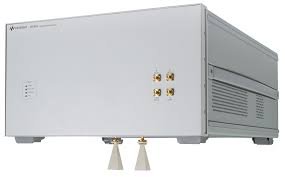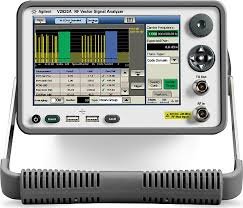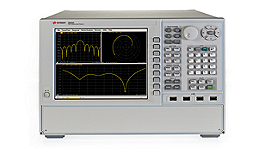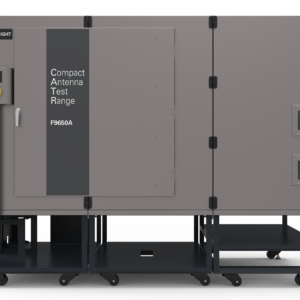
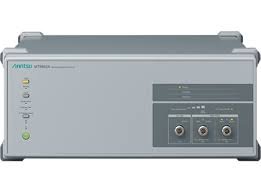

The Anritsu MT8862A Wireless Connectivity Test Set measures transmit and receive RF performance of WLAN devices across IEEE 802.11a/b/g/n/ac/ax/be standards. It operates in the 2.4 GHz, 5 GHz, and 6 GHz frequency bands with channel bandwidths up to 320 MHz and modulation support to 4096 QAM. The instrument supports both Network Mode—which connects to the device under test via standard WLAN signalling with WEP, WPA-Personal, WPA2-Personal, and WPA3-Personal encryption—and Direct Mode for flexible testing without requiring dedicated test mode entry.
Technical Specifications
• Frequency Bands: 2.4 GHz, 5 GHz, 6 GHz
• Channel Bandwidths: 20 MHz to 320 MHz
• Modulation: Up to 4096 QAM (802.11be)
• Supported Standards: IEEE 802.11a/b/g/n/ac/ax/be (Wi-Fi 4 through Wi-Fi 7)
• Rx Sensitivity Range: -120 to 0 dBm (bathtub curve generation)
– Key Features
• Transmit measurements include Tx power via ICMP echo request, modulation accuracy (EVM), and per-data-rate signal evaluation at user-specified rates
• Receive testing delivers Rx sensitivity measurements using ACK frame counting for packet error rate calculation and automatic bathtub curve generation across -120 to 0 dBm power levels
• MIMO testing supports 2×2 configurations using two MT8862A units for both conducted and over-the-air environments
• Web browser GUI accessible via Ethernet eliminates separate setup software and firmware version matching concerns
• Ethernet port enables IP data exchange with external servers; supports DHCP client function, host settings, and domain name configuration
• Frame capture logging saves data in *.pcap format for protocol analysis and troubleshooting
• Remote control capability when connected to the same network as the PC controller
– Typical Applications
• R&D evaluation of WLAN device RF performance under realistic operating conditions
• Compliance testing across multiple IEEE 802.11 standards
• Manufacturing quality assurance and production testing
– Compatibility & Integration
Network Mode supports secure connections with WEP, WPA-Personal, WPA2-Personal, and WPA3-Personal encryption schemes. Direct Mode provides flexible inspection of WLAN equipment without protocol-dependent constraints. Ethernet connectivity and DHCP client integration streamline deployment in networked test environments.