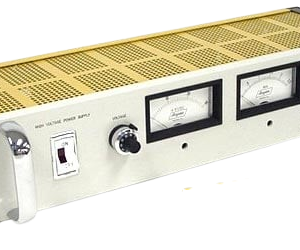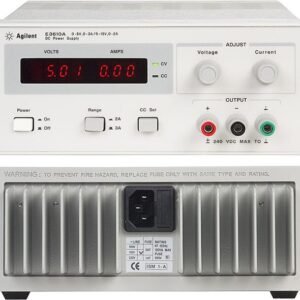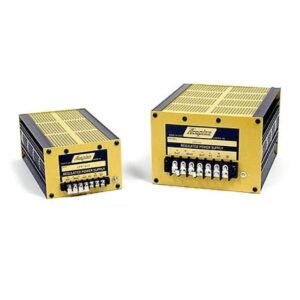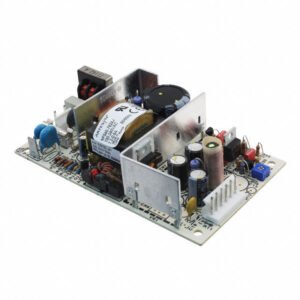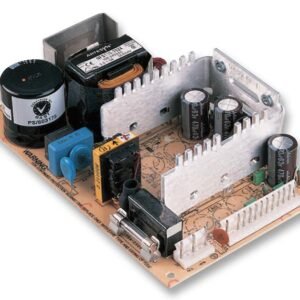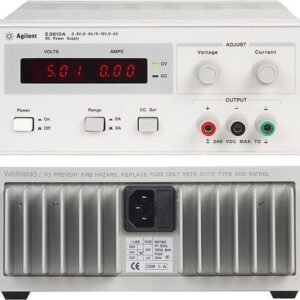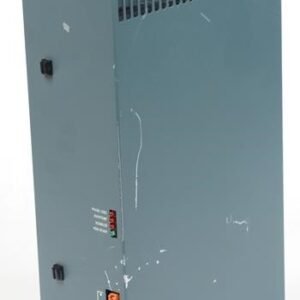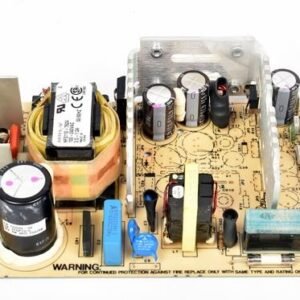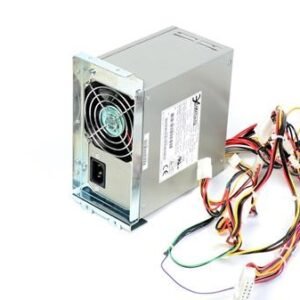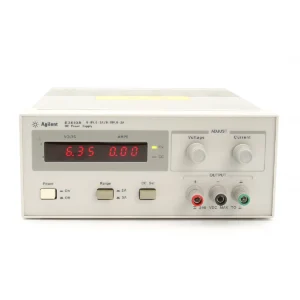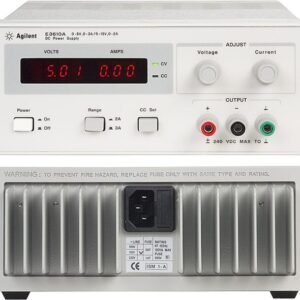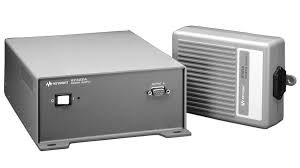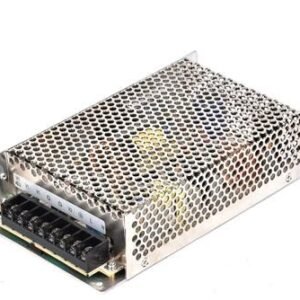
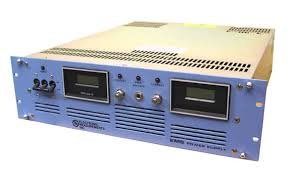

The Lambda/TDK EMI EMS40 is an enclosed switch-mode DC power supply engineered for industrial, embedded systems, laboratory test, and burn-in applications. It delivers well-regulated, adjustable DC voltage or current with constant voltage/constant current operation and automatic crossover. Universal AC input acceptance (50/60 Hz) and active power factor correction on select models ensure flexible deployment across global power infrastructures. Built-in overvoltage, overcurrent, and thermal protection safeguard loads in demanding environments. Efficiency reaches 88% or higher. Full programmability via analog or optional RSTL digital interface supports both local and remote control.
## Technical Specifications
**Electrical Performance**
• AC Input: Universal 115 VAC / 220 VAC; 50/60 Hz; active PFC available on certain configurations
• DC Output: 40 V nominal (model-dependent); 600 W to 2.5 kW power range
• Load Regulation: <0.1% (100% load change)
• Stability: 0.05%
• Transient Response: 650 µs (30% load change, ≤20 VDC models)
• Efficiency: Up to 88% or higher
• Output Nulling: Supported
• Remote Sensing: Available
**Protection & Safety**
• Overvoltage Protection (OVP): Adjustable front-panel control
• Overcurrent Protection (OCP): Standard
• Over-Temperature Protection (OTP): Built-in thermal cutoff
• Fuse Protection: Field-replaceable per specification rating
## Key Features
• Adjustable CV/CC operation with seamless mode transition
• Fully programmable via analog or RSTL digital interface
• Local and remote programming capability
• Front-panel adjustment and monitoring
• Three-phase input support on higher-power models
## Typical Applications
• Industrial power distribution and embedded systems
• Laboratory testing and component burn-in
• Semiconductor processing equipment
• Medical and scientific instrumentation
## Compatibility & Integration
Analog programming and optional RSTL digital interface enable integration into automated test systems and process control environments. Remote sensing maintains output regulation at the point of load.