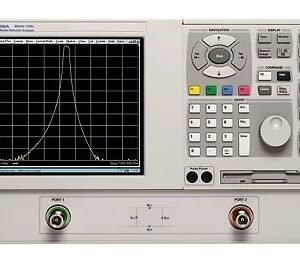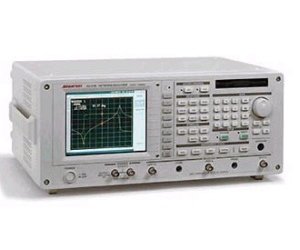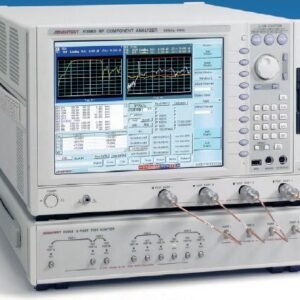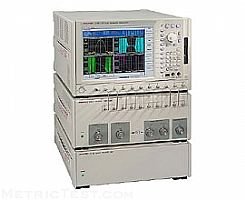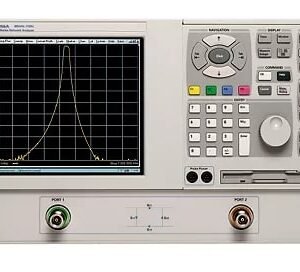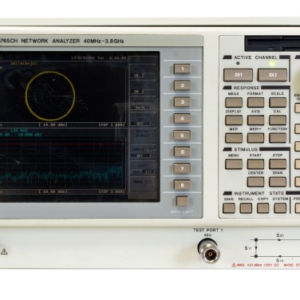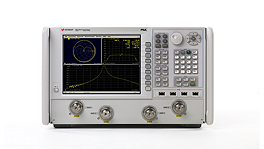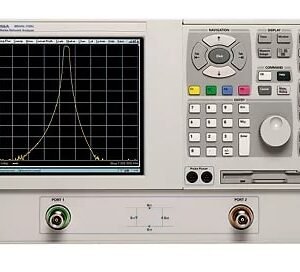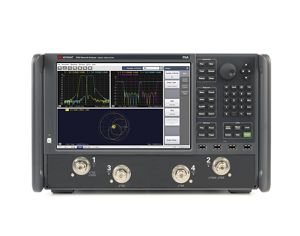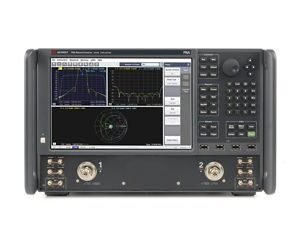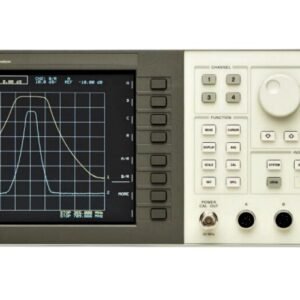

The Marconi IFR Aeroflex 6821 is a scalar network analyzer delivering precise amplitude measurements from 1.00 MHz to 3.00 GHz. Built around a synthesized RF source with low phase noise and 1 Hz frequency resolution, it provides EEPROM-corrected scalar detection for filters, amplifiers, cables, and transmission line characterization. The instrument combines real-time fault location with 0.1% accuracy, marker-driven ripple and bandwidth analysis, and flexible modulation options—making it suitable for both RF component testing and in-field diagnostics across its operating spectrum.
Technical Specifications
• Frequency Range: 1.00 MHz to 3.00 GHz
• Measurement Type: Scalar network measurements
• Signal Source: Synthesized RF source with low phase noise; 1 Hz frequency resolution
• Harmonic Performance: Less than -50 dBc (70 MHz to 24 GHz)
• Detectors: EEPROM-corrected scalar detectors
• Transmission Line Fault Location: Real-time measurement with 0.1% accuracy
• Display: Large TFT color display; up to four simultaneous measurements on two independent channels
• Markers: Eight markers with automated peak-to-peak ripple, N-dB bandwidth, -1 dB bandwidth, maximum, and minimum level calculations
– Key Features
• Internal modulation: Pulse, FM, and Pulse generator options
• External FM via rear-panel AF generator input
• CW mode for local oscillator substitution
• Power sweep function for amplifier gain compression testing
• Optional step attenuators for low-power device testing
• IEEE 488.2 GPIB interface with full Talk/Listen capability; 401 data points transferable in <50 ms
• USB connectivity for data transfer and storage
• Buffered plotter control via HPGL during measurement
– Typical Applications
• Filter and amplifier characterization
• Cable loss and impedance measurements
• Transmission line fault detection
• Receiver and amplifier gain compression analysis
• Component-level RF testing across UHF, L, S, and C bands
– Compatibility & Integration
Fully compliant with IEEE 488.2 GPIB standard for instrument automation and data acquisition. USB integration enables direct results transfer and archival. Repetitive single-point queries supported at ~10 ms intervals.