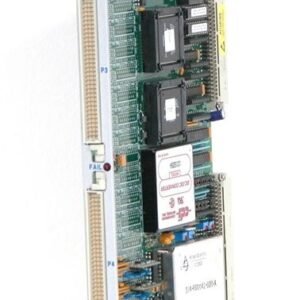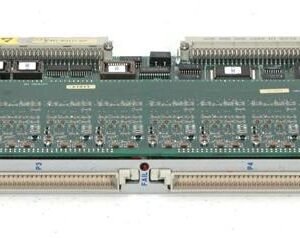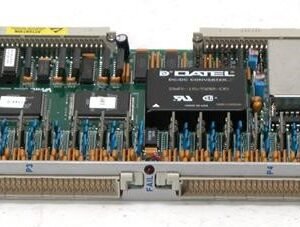

The National Instruments USB-8451 is a bus-powered USB interface for I²C, SMBus, and SPI device communication. It delivers a compact, plug-and-play solution for prototyping, testing, and system integration with consumer electronics and integrated circuits. The device minimizes noise and reduces bus lengths through direct physical proximity to target devices, offering a practical alternative to PCI-based solutions.
Technical Specifications
• I²C Master: Clock rates to 250 kHz; 7 and 10-bit addressing supported
• SMBus Master: Clock rates to 100 kHz
• SPI Master: Clock rates to 12 MHz; all four SPI modes supported
• Digital I/O: Eight independently configurable lines (input or output)
• Output drivers: Push-pull or open-drain (software selectable); open-drain requires external 1 kΩ minimum pull-up resistors to 3.3 V or 5 V
• Power supply: +5 V fixed output (±5% tolerance) with 20 mA maximum drive capability; typical consumption 80 mA; maximum 500 mA at 4.10–5.25 VDC
• Standby power: 300 µA; USB suspend: 500 µA maximum
• Protection: Integrated overcurrent, overvoltage, and undervoltage protection on SPI, DIO, and chip-select signals
• USB interface: Full-speed USB 2.0 (12 Mb/s)
– Key Features
• DIO lines default to high-impedance inputs at startup and reset
• Connectors: USB Series B receptacle and two 16-position screw terminal plug headers
• High-level API support for NI LabVIEW, LabWindows/CVI, and Microsoft Visual C/C++ 6.0
• Advanced API for custom I²C and SPI transactions
– Typical Applications
• Device firmware development and validation
• Sensor interfacing and data acquisition
• Embedded system prototyping
• Production testing of I²C and SPI peripherals
– Compatibility & Integration
The USB-8451 integrates directly with host systems via standard USB connectivity. Its screw terminal connectors support direct wiring to target circuits, while the software-configurable output drivers accommodate both push-pull and open-drain architectures without hardware changes.