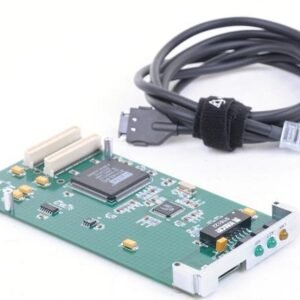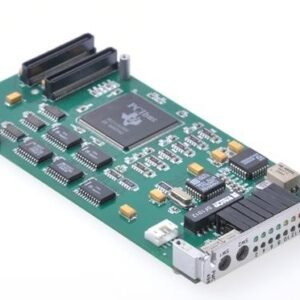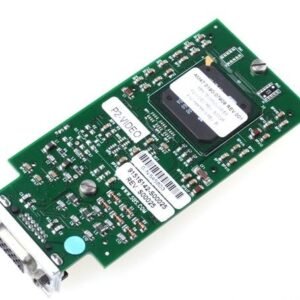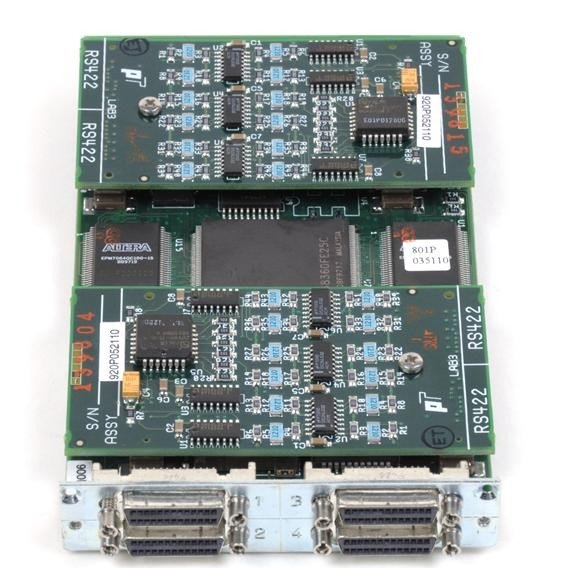

The Performance Technologies PT-SBS334A is a 4-port Serial Input/Output controller designed for SBus-equipped systems requiring high-performance serial communication. Built around a 25 MHz Motorola MC68360 QUICC processor, this single-slot controller delivers intelligent protocol handling and offloads low-level communication tasks from the host system, enabling sustained data rates up to 2 Mbps per channel with a maximum aggregate line speed of 8 Mbps across all ports simultaneously.
Technical Specifications
• Architecture: Single-slot SBus expansion controller
• Serial Ports: 4 x synchronous/asynchronous I/O ports
• Processor: 25 MHz Motorola MC68360 QUICC
• Memory: 2 MB onboard DRAM (4 MB configurations available)
• DMA Channels: 8 integral Direct Memory Access channels
• Data Transfer Rates: 1–2 MB/sec sustained per port; 2 Mbps per channel (T1/E1 rates); 8 Mbps maximum aggregate across all ports
• Line Interfaces: Dual Line Adapter Boards (LABs), each supporting 2 serial ports; RS-232C, RS-422/449/485/530, V.35/Bell 306, and MIL-STD-188C/114A supported
• Physical Connectors: DB-25 (RS-232C), DB-37 (RS-449), configurable via external cables
• Modem Control Signals: Full complement on all data communication ports
– Key Features
• Onboard MC68360 QUICC processor reduces host CPU load by managing protocol handling internally
• Eight DMA channels enable efficient data movement without processor intervention
• Configurable line adapter boards support multiple industry-standard serial interfaces
• T1/E1 rate capability (2 Mbps) on each channel for telecommunications and data networking
• Dual memory configurations (2 MB or 4 MB) for data buffering and program storage
– Typical Applications
Serial multiplexing, telecommunications interfaces, multi-protocol synchronous/asynchronous communication systems, and legacy SBus-based computing platforms requiring dedicated serial I/O processing.
– Compatibility & Integration
Designed for SBus expansion slots in Solaris-based systems. Related PCI-based variants support Linux, Windows, and Solaris operating environments.