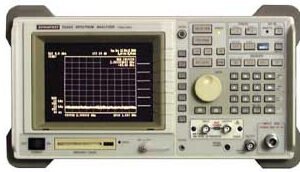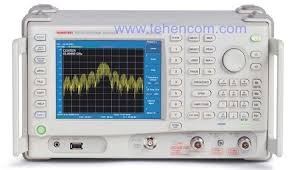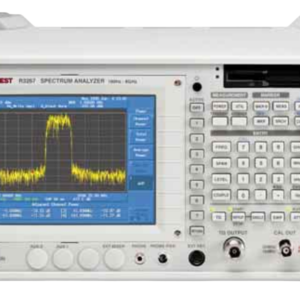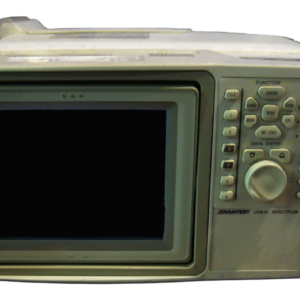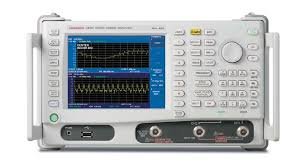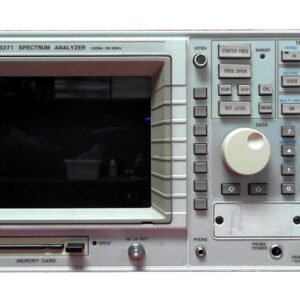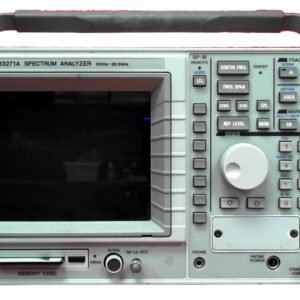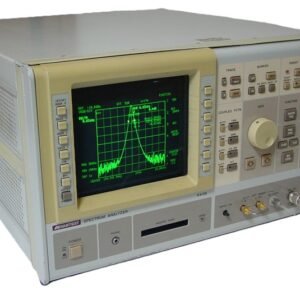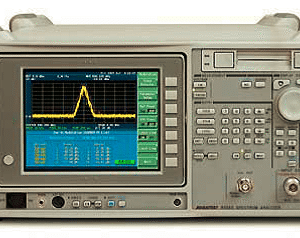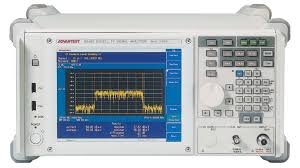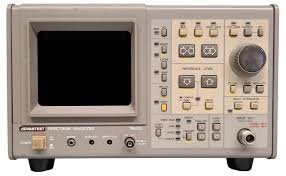

The Rohde & Schwarz FSV40 is a high-performance spectrum analyzer engineered for signal analysis from 10 Hz to 40 GHz. It delivers exceptional dynamic range exceeding 115 dB and DANL of typically -158 dBm (1 Hz RBW, 2–40 GHz), making it suitable for research, signal intelligence, and wireless compliance testing. The instrument performs spectrum analysis, vector signal analysis, phase noise measurement, harmonic and intermodulation distortion characterization, and power analysis across modulated signals. Resolution bandwidth spans 1 Hz to 10 MHz with analysis bandwidth up to 160 MHz. Frequency resolution reaches 1 Hz. Level measurement uncertainty is ±0.5 dB typical. The FSV40 demodulates LTE, 5G NR, Wi-Fi, Bluetooth, and multiple digital formats (QPSK, 16QAM, 64QAM, 256QAM). Phase noise performance is typically -132 dBc/Hz at 10 kHz offset (1 GHz). A high-resolution touchscreen display enables rapid measurement throughput and transient analysis with fast sweep speeds. External triggering and line trigger support are standard. The analyzer operates on 100–240 V AC (50–60 Hz) at approximately 250 VA. RF input uses Type-N Female connectors at 50 Ohms impedance. Digital connectivity includes USB, Ethernet (RJ45), and GPIB (IEEE 488.2) for remote control and data transfer. Video output via DisplayPort or HDMI accommodates external monitors.
Technical Specifications
• Frequency Range: 10 Hz to 40 GHz
• Frequency Resolution: 1 Hz
• Resolution Bandwidth: 1 Hz to 10 MHz
• Analysis Bandwidth: Up to 160 MHz
• Dynamic Range: Typically >115 dB (RF Attenuation 0 dB, RBW 1 kHz)
• DANL: Typically -158 dBm (1 Hz RBW, 2–40 GHz)
• Phase Noise: Typically -132 dBc/Hz at 10 kHz offset (1 GHz)
• Level Measurement Uncertainty: ±0.5 dB (typical)
• RF Input Impedance: 50 Ohms
• Input Voltage: 100–240 V AC, 50–60 Hz
• Power Consumption: Approximately 250 VA
– Key Features
• Vector signal analysis and spectrum analysis
• ACPR, out-of-band power, channel power, and spurious response measurements
• Harmonic distortion and intermodulation distortion analysis
• Demodulation support for LTE, 5G NR, Wi-Fi, Bluetooth
• Digital modulation format support (QPSK, 16QAM, 64QAM, 256QAM)
• Transient analysis with high capture bandwidth
• External trigger and line trigger inputs
– Interfaces
• RF Input: Type-N Female, 50 Ohms
• USB ports for external storage and accessory control
• Ethernet (RJ45) for remote control and data transfer
• GPIB (IEEE 488.2) for legacy instrument control
• DisplayPort or HDMI for external monitor connection
– Typical Applications
• RF and microwave signal characterization
• Wireless communication compliance testing
• Complex modulated signal analysis
• Spectral purity and signal integrity verification
• Research and development in high-frequency environments