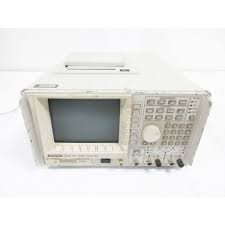

The Stanford Research Systems SR830 DSP Lock-In Amplifier delivers high-performance signal recovery in noise-dominated environments through advanced digital signal processing. This instrument simultaneously measures magnitude and phase with superior accuracy and stability compared to conventional analog designs. The DSP architecture provides over 100 dB dynamic reserve without requiring external bandpass filters, eliminating associated noise and phase errors inherent to analog filtering.
Technical Specifications
Frequency & Measurement Range
• Operating frequency: 1 mHz to 102.4 kHz
• Harmonic detection up to 102 kHz without reference frequency adjustment
• Phase resolution: 0.01 degrees
• Input noise: 6 nV/√Hz at 1 kHz (typical)
• Full-scale sensitivity: 2 nV to 1 V (1-2-5-10 sequence)
Input Configuration
• Differential voltage inputs with AC/DC coupling selectable
• Voltage input impedance: 10 MΩ + 25 pF
• Current input impedance: 1 kΩ to virtual ground
• Current measurement gains: 10⁶ V/A and 10⁸ V/A
• Line filters: 50/60 Hz (1x) and 100/120 Hz (2x)
Signal Processing
• Dynamic reserve: Greater than 100 dB (drift-free)
• Time constants: 10 µs to 30 ks with up to 24 dB/octave roll-off
• Synchronous filters available below 200 Hz
• Temperature stability: 5 ppm/°C
Display & Output
• Dual 4½-digit LED displays with 40-segment bar graphs
• Channel 1: X, R, X-noise, Aux 1, or Aux 2 selectable
• Channel 2: Y, Θ, Y-noise, Aux 3, or Aux 4 selectable
• 10x or 100x expansion for X, Y, R measurements
• Auto-offset function with manual offset to ±105% full scale
Data Acquisition
• Dual 16,000-point buffers for simultaneous recording
• Recording rates to 512 Hz
• TTL trigger input for external synchronization
Connectivity
• GPIB (IEEE-488.2) and RS-232 interfaces
• Synthesized internal reference or external reference phase-lock
• Sine and TTL reference outputs
Power Requirements
• 100 V, 120 V, 220 V, or 240 V nominal AC (50/60 Hz)
• Fuse: 1 A (100/120 V) or 0.5 A (220/240 V)
– Key Features
• DSP architecture eliminates need for input bandpass filtering
• Simultaneous magnitude and phase measurement with independent scaling
• Harmonic detection without tuning changes
• Extended time constant range for low-frequency lock-in applications
• Dual independent measurement channels with large data buffers
– Typical Applications
Light-modulation spectroscopy, impedance analysis, noise measurement, phase-sensitive detection in materials characterization, and weak-signal recovery in oscillating-field experiments.