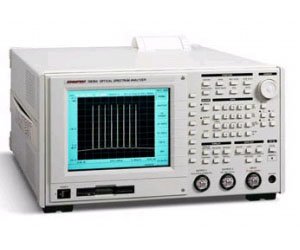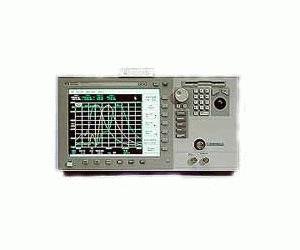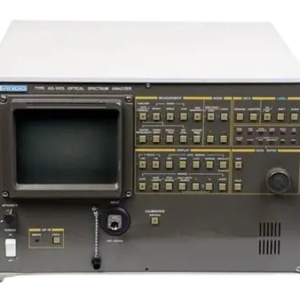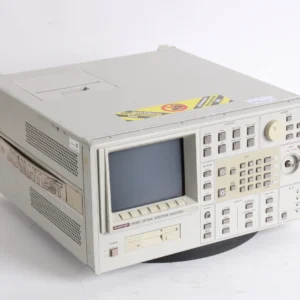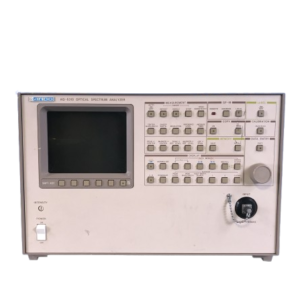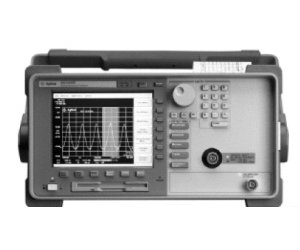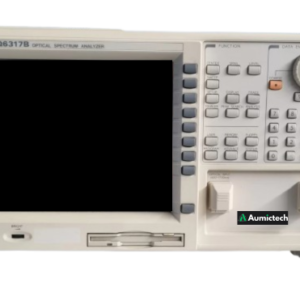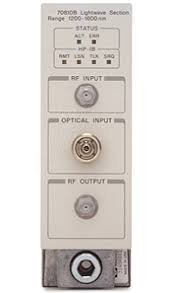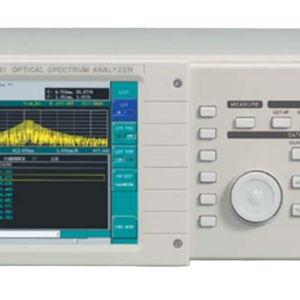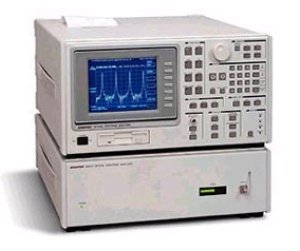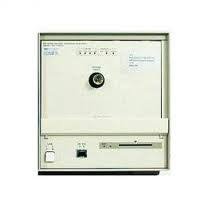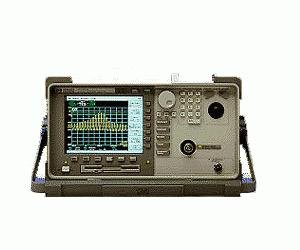
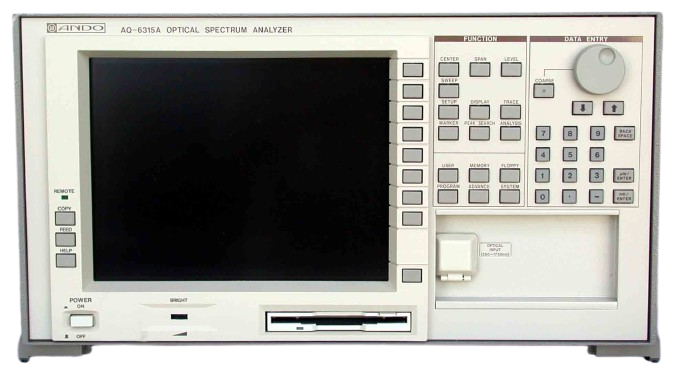

The Ando AQ6315A is an optical spectrum analyzer engineered for precision measurement across the 350–1750 nm spectral range. Its dual-pass monochromator design operates in selectable single-pass or double-pass modes, delivering high resolution and sensitivity for demanding optical characterization tasks. The instrument combines wavelength accuracy of ±0.05 nm (at 1510–1570 nm) with measurement capability from –90 dBm to +20 dBm across core telecom bands, making it suitable for WDM channel analysis, LED spectral profiling, and optical component testing.
Technical Specifications
Wavelength Performance
• Range: 350–1750 nm
• Accuracy: ±0.05 nm (1510–1570 nm, 25 ± 5°C)
• Linearity: ±0.02 nm (1510–1570 nm)
• Resolution: 0.05–10 nm (selectable)
Measurement Level
• Dynamic range: –90 dBm to +20 dBm (1000–1600 nm)
• Extended range: –65 dBm to +20 dBm (350–1750 nm)
• Level accuracy: ±0.3 dB (633/1310/1550 nm)
• Maximum input: +20 dBm (100 mW)
Optical Performance
• Dynamic range (stray light): 60–70 dB (±0.5–1 nm)
• Polarization dependency: ±0.05–0.1 dB (1310/1550 nm)
• Linearity: ±0.05 dB (0 to –40 dBm), ±0.2 dB (0 to –60 dBm)
Sweep Performance
• Short span (≤500 nm): 0.5 s or less
• Full span: 2.5 s or less
– Key Features
• Dual-pass monochromator with single/double-pass selection
• Automatic peak/bottom and spectral width searches
• SMSR and notch width measurement functions
• WDM and optical amplifier NF analysis
• Pulsed light measurement and power meter modes
• Averaging and max./min. hold display modes
• Marker-to-marker power and spectral measurements
• 3D and dual-trace display capabilities
• 20 programmable measurement routines (200 steps each)
• Wavelength calibration and color analysis functions
– Typical Applications
• WDM system characterization and channel spacing verification
• LED and broadband source spectral analysis
• Optical component testing (filters, gratings, couplers)
• Fiber optic system diagnostics
• Optical amplifier noise figure assessment
– Compatibility & Integration
Standard optical fiber interfaces support direct connection to 10/125 SM fiber. User-definable keys and programmable routines enable integration into automated test sequences and laboratory workflows.