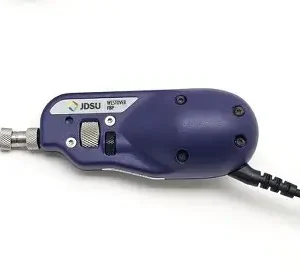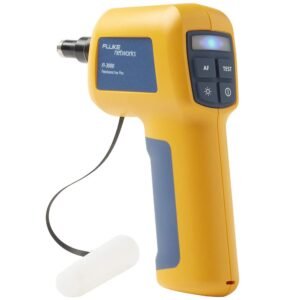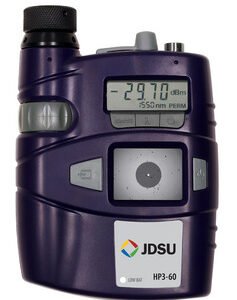
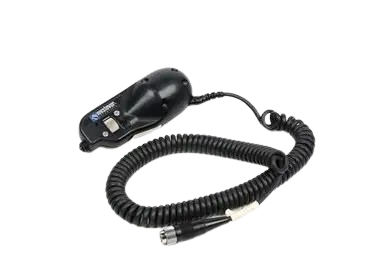

The JDSU FBP-P1-400 is a handheld analog video inspection probe microscope engineered for real-time examination of fiber optic connector end faces. Delivering 400X magnification with NTSC video output, this probe enables technicians to detect contamination, damage, and debris that compromise network performance. The integrated blue coaxial LED illumination and 1/3-inch CMOS sensor provide clear, magnified imagery across a 350 μm horizontal field of view, while manual focus control on the probe body ensures precise image clarity. Its compact, lightweight design and 240 cm cord facilitate inspection of connectors in restricted access areas, including those within patch panels and optical transceivers.
Technical Specifications
• Magnification: 400X
• Video Output: NTSC
• Sensor: 1/3-inch CMOS
• Light Source: Blue LED, coaxial illumination, 100,000+ hours rated life
• Focus Control: Manual, adjustable on probe
• Horizontal Field of View: 350 μm at 400X magnification
• Connector Interface: 4-pin Hirose™ male
• Dimensions: 46 × 43 × 140 mm (1.8 × 1.7 × 5.5 in)
• Weight: 180 g (6.35 oz)
• Cord Length: 240 cm (94 in)
• Power Source: Display device or USB module
– Key Features
• Coaxial blue LED provides uniform illumination of the fiber end face
• In-probe focus adjustment for manual image optimization
• QuickCapture™ button for instantaneous image capture with compatible displays
• Compatible with interchangeable precision stainless-steel inspection tips for bulkhead, patch cord, APC, angled, and ribbon connectors
• Secure 4-pin Hirose™ male connector for JDSU display and USB converter integration
– Typical Applications
• Fiber optic connector end-face inspection
• Bulkhead and patch cord connector examination
• Simplex and multi-fiber ribbon connector analysis
• Connector inspection within transceivers and optical devices
• Hard-to-reach connector locations behind patch panels
– Compatibility & Integration
The FBP-P1-400 connects via 4-pin Hirose™ male connector to JDSU-compatible display units and USB conversion modules, enabling flexible integration into existing optical test and inspection workflows.