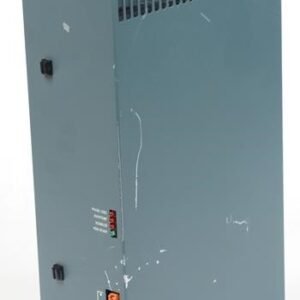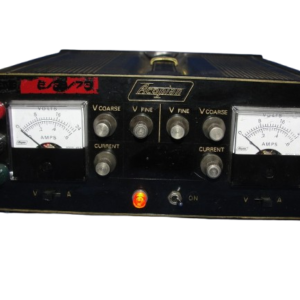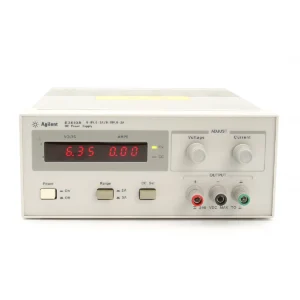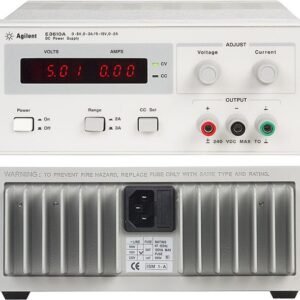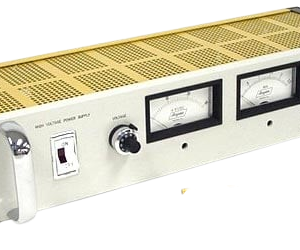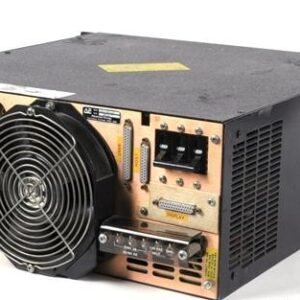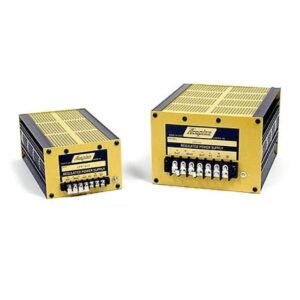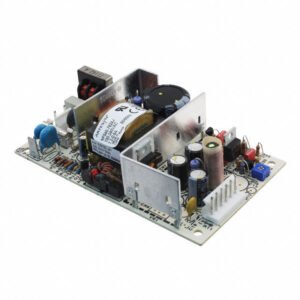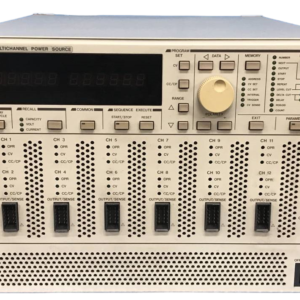

The Systron Donner DL40-1A is a dual-output DC power supply engineered for laboratory and industrial applications demanding precise voltage and current control. Each of the two independent, floating outputs delivers 0–40V DC at up to 1.5A, with exceptional line and load regulation, sub-millisecond recovery performance, and automatic CV/CC mode switching. Built-in current limiting provides short-circuit protection, while remote voltage programming and remote sensing capabilities enable operation directly at the load with minimal line drop compensation. The unit accepts 100–125 VAC input at 47–420 Hz, making it suitable for diverse field and bench environments.
Technical Specifications
Output Characteristics (per channel)
• Voltage: 0–40V DC, continuously adjustable via 10-turn potentiometer
• Current: Up to 1.5A DC
• Line Regulation: 0.01% or 2 mV (100–125/200–250 VAC); 0.02% or 2 mV (105–125 VAC)
• Load Regulation: 0.01% or 3 mV; 0.02% or 5 mV (no load to full load)
• Ripple and Noise: 250 µV RMS, 2 mV p-p (10 MHz); 20 mV p-p @ 420 Hz
• Temperature Coefficient: (0.02% + 400 µV)/°C
• Stability: 0.05% or 10 mV; 0.1% or 10 mV over 8 hours post warm-up
• Recovery Time: 25 µs to 0.05% or 15 mV (100% load step); 50 µs (80% load step)
Input Power
• Voltage: 100–125 VAC
• Frequency: 47–420 Hz
• Protection: Fuse
Operating Weight
• Approximately 20 pounds (9.07 kg)
– Key Features
• Dual independent outputs with floating configuration
• Constant voltage and constant current modes with automatic switching
• Automatic calibrated current limiting
• Remote voltage programming (approximately 500 Ω/V scale factor)
• Remote sensing with up to 0.5V per-leg line-drop compensation
• Current adjustment via standard potentiometer control
– Typical Applications
• Electronics testing and circuit prototyping
• Sensitive equipment powering requiring stable voltage and current delivery
• Laboratory bench work demanding independent dual-supply capability
• Industrial applications with floating output requirements
– Compatibility & Integration
Each output provides dedicated positive, negative, and ground terminals. Remote programming and sensing interfaces enable integration into automated test systems and remote monitoring installations.