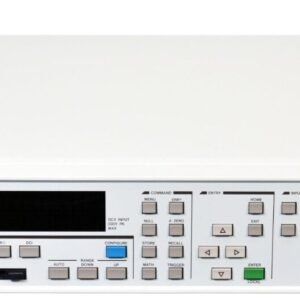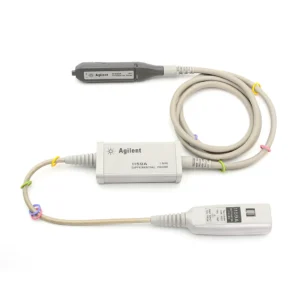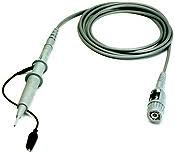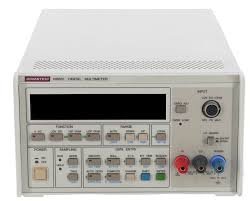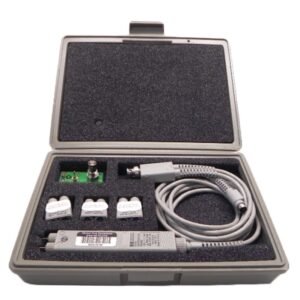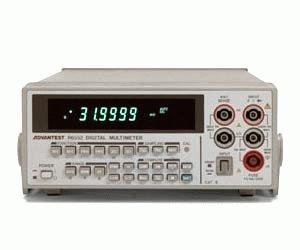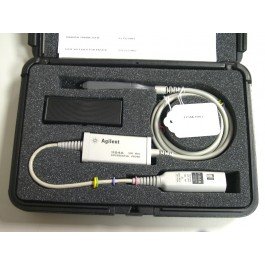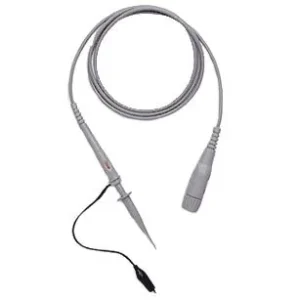

The Teledyne LeCroy T3MIL50 is a precision DC milli-ohm meter engineered for accurate low-resistance measurements from 5 mΩ to 5 MΩ. It employs four-terminal Kelvin connection architecture to eliminate lead resistance effects, delivering 0.05% accuracy with 0.1 μΩ resolution. The instrument supports dual measurement speeds—60 readings/second (fast) and 10 readings/second (slow)—without sacrificing measurement fidelity.
A 3.5-inch TFT LCD display with 320×240 resolution and 50,000-count capacity provides clear result visualization. The meter sources constant current from 1 μA to 1 A, with standard 1 A test current for typical measurements. Drive modes include DC+ and Standby operation.
Technical Specifications
• Measurement Range: 5 mΩ to 5 MΩ
• Accuracy: 0.05%
• Resolution: 0.1 μΩ
• Test Current: 1 μA to 1 A (1 A standard)
• Measurement Speed: 60 readings/second (fast); 10 readings/second (slow)
• Display: 3.5-inch TFT LCD, 320×240 pixels, 50,000 counts
• Connection: 4-wire Kelvin
• Operating Temperature: 0°C to 40°C
• Physical: 283 mm × 223 mm × 102 mm; 3 kg
– Key Features
• Four-terminal Kelvin connection minimizes lead resistance errors
• Selectable measurement speeds preserve accuracy across both modes
• Built-in temperature measurement and compensation functions
• 20 sets of panel setting memory with save/recall capability
• Temperature conversion function for extended characterization
– Typical Applications
• Contact resistance testing of switches, relays, connectors, and cables
• Inductive component testing: coils, chokes, transformer windings
• Low-value resistor and fuse characterization
• Motor, transformer, solenoid, and ballast winding resistance measurement
• PCB track conductivity evaluation
• Incoming inspection and quality assurance protocols
– Compatibility & Integration
Interfaces include USB Device, RS-232C, and a combined D-sub 25-pin HANDLER/SCAN/EXT I/O connector. Handler functionality integrates with production sorting machines; Scan and EXT I/O ports accept external switch or trigger control signals. Mains-powered operation.