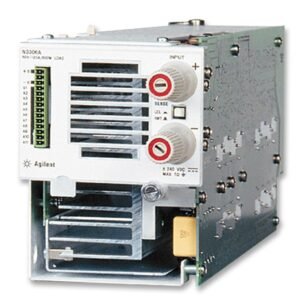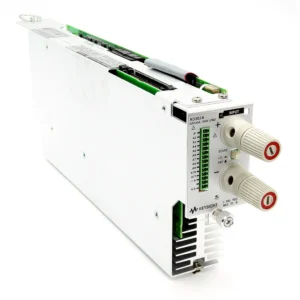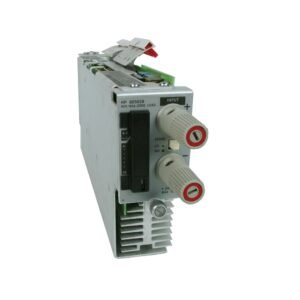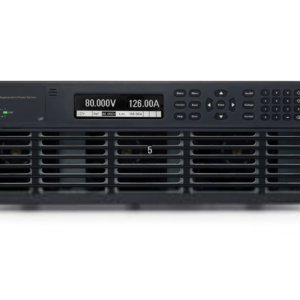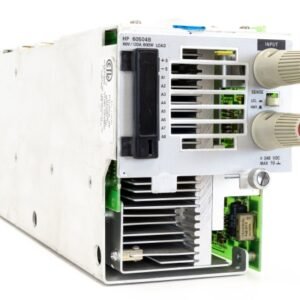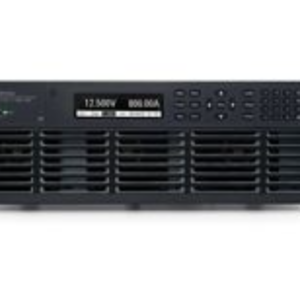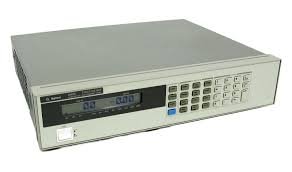
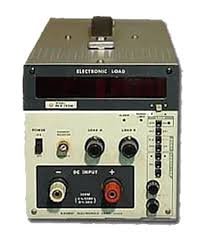

The Kikusui PLZ-152W is a single-channel DC electronic load designed for testing power supplies, batteries, and power components across laboratory and industrial environments. Operating from 4 VDC to 110 VDC with maximum current of 30 A and maximum power rating of 150 W, the unit delivers precise load emulation through four operating modes: Constant Current (CC), Constant Resistance (CR), Constant Power (CP), and Constant Voltage (CV).
## Technical Specifications
• Maximum Input Voltage: 110 VDC
• Maximum Input Current: 30 A DC
• Maximum Loading Power: 150 W
• Input Loading Voltage Range: 4–110 VDC
• Constant Current Stability: ±0.1% + 5 mA (4 V to 110 VDC variation); ±0.1% + 5 mA (10% line voltage variation)
• CC Mode Ranges: 0–30 A and 0–3.0 A (dual ranges)
• CR Mode Ranges: 0.1 Ω and 1 Ω (dual ranges)
• Total Resistance Range: 0.13 Ω to 100 Ω
• Ripple and Noise: 5 mA rms (5 Hz–1 MHz)
• Power Input: 120 VAC ±10% or 240 VAC ±10%, 50/60 Hz, single phase
• Power Consumption: Approximately 30 VA
• Auto-ranging 3.5-digit panel meter for voltage and current display
## Key Features
• Dual load settings (LOAD A and LOAD B) with ten-turn potentiometers for precise adjustment
• Built-in switching oscillator enables automatic load transitions between settings with user-adjustable periods from 1 ms to 100 ms—ideal for transient response testing
• Master/slave operation allows parallel connection of multiple units for increased load capacity
• Remote control capability via external resistance or voltage input for CC and CR modes
• Remote sensing terminals minimize measurement error in voltmeter readings
• Automatic protection circuits guard against overvoltage, overcurrent, overpower, overtemperature, and reverse polarity conditions
• Zero-volt operation capability (PLZ-152WA model)
## Typical Applications
Power supply validation, battery discharge testing, transient response characterization, and multi-unit parallel load configurations.
## Compatibility & Integration
Benchtop configuration with rear panel DC input terminals, current monitor output, remote sensing connections, and master/slave control terminals. Front panel controls include mode selection switches and load level buttons.