
The Newport 525 Laser Diode Driver is a precision current source engineered for accurate and stable control of laser diodes across laboratory and research applications. Operating in constant current (I) or constant laser power (P) modes, it delivers selectable output current ranges from 0–50 mA to 0–6000 mA with resolution as fine as 0.005 mA and accuracy of ±0.1% full scale. The driver maintains exceptional stability: short-term drift below 10 ppm over 30 minutes to 1 hour, long-term drift below 50 ppm over 24 hours, and temperature coefficient better than 50 ppm/°C. Output noise remains minimal at less than 2 µA (high bandwidth) or 4 µA (low bandwidth), with the 505B variant achieving under 1 µA high-bandwidth noise.
Technical Specifications
• Output Current Range: 0–50 mA, 0–100 mA, 0–200 mA, 0–500 mA, 0–1000 mA, 0–2500 mA, 0–3000 mA, 0–6000 mA (selectable)
• Output Current Resolution: 0.005 mA to 0.250 mA (range-dependent)
• Output Current Accuracy: ±0.1% FS
• Compliance Voltage: 5 V or 7 V
• Short-Term Stability: <10 ppm FS (1 hour)
• Long-Term Stability: <50 ppm FS (24 hour)
• Temperature Coefficient: <50 ppm/°C
• Output Noise (rms): <2 µA (high bandwidth), <4 µA (low bandwidth)
• Monitor Photodiode Input: 0–5 mA range, ±0.05 accuracy, 24 h stability <1.0 µA
• External Modulation Input: 0–10 V, 10 kΩ impedance, DC to 660 kHz (high bandwidth) or DC to 12 kHz (low bandwidth)
• Power Input: 100–120 VAC or 200–240 VAC, 50–60 Hz
– Key Features
• Redundant FET and relay shorting circuits protect against laser diode damage
• Slow start sequence with programmable delay before current ramps to setpoint
• Unconditional current limit protection prevents exceeding maximum diode operating current
• Monitor photodiode input accepts zero-biased or reverse-biased signals to 5 V
• USB 2.0 interface for remote control
– Typical Applications
• Precision laser diode control in laboratory spectroscopy
• Research-grade optical measurement systems
• Automated test and characterization setups
– Compatibility & Integration
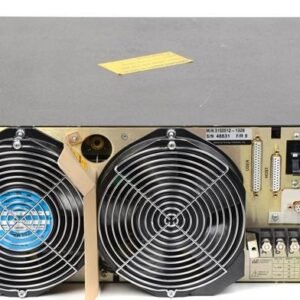
• Interlock/Photodiode: 9-pin female D-sub connector
• External Photodiode: BNC connector
• Modulation Input: BNC connector
• Analog modulation via external 0–10 V source enables dynamic wavelength or power tuning