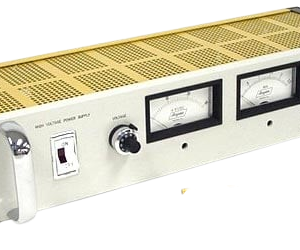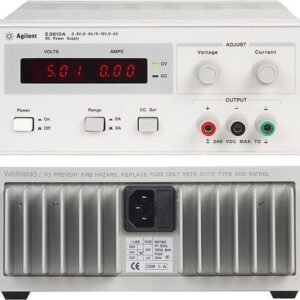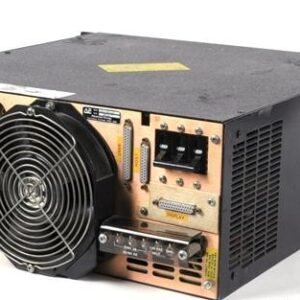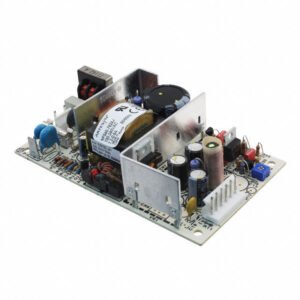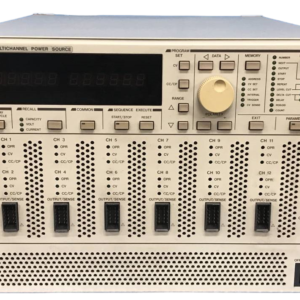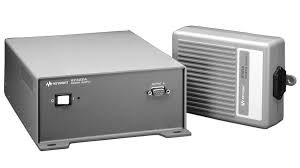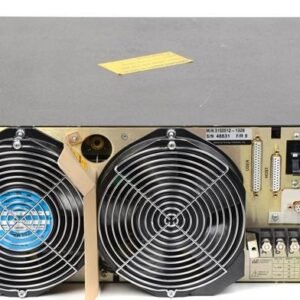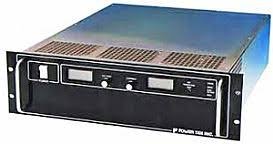

The Power Ten P63C-30220 is a 6.6 kW programmable DC power supply engineered for high-current applications in semiconductor burn-in, process control, medical systems, and production test environments. Operating from 0–30 V at up to 220 A, this unit delivers stable, regulated power through efficient switching topology with PWM and zero-crossing design. Output ripple and noise measure 75 mV peak-to-peak, while line regulation holds 0.1% and load regulation maintains 0.5% of maximum rated output. Transient response recovers within ±2% of set voltage in 10 msec following a 30% current step load.
Technical Specifications
• Output: 0–30 V DC, 0–220 A
• Maximum Power: 6.6 kW
• Output Ripple & Noise: 75 mV (p-p)
• Line Regulation: 0.1% of max rated output
• Load Regulation: 0.5% of max rated output
• Transient Recovery: ±2% within 10 msec (30% current step)
• Voltage Stability: ±0.05% per 8 hours (after 30 min warm-up)
• Voltage Readback Accuracy: ±(0.1% + 0.15% of full scale)
• Current Readback Accuracy: ±(0.1% + 0.4% of full scale)
• Input: 190–253 V AC, 30–20 A, 47–63 Hz
• Output Interface: Bus bars with 0.390″ interface holes (0.410″ for ≤50 V outputs)
• Weight: 60 lbs (P63C-30220S)
– Key Features
• Remote programming of voltage and current (0–100%)
• Optional IEEE 488.2 and RS-232 interfaces with SCPI protocol
• Remote on/off control via contact closure (6–120 VDC, TTL/CMOS)
• Output voltage and current monitoring
• Overvoltage protection limit adjustment
• Remote sensing terminals for load compensation
• Control isolation option for ground-independent operation
• Master/Slave, Series, and Parallel configuration support
– Typical Applications
• Semiconductor device burn-in and characterization
• Process control and production test systems
• Medical equipment power delivery
• High-current DC load simulation
– Compatibility & Integration
P63 Series design ensures thermal stability and long-term reliability through conservative component derating. Supports multichannel expansion and integrated system architectures via Master/Slave configurations.